
Chaetachme
Chaetachme
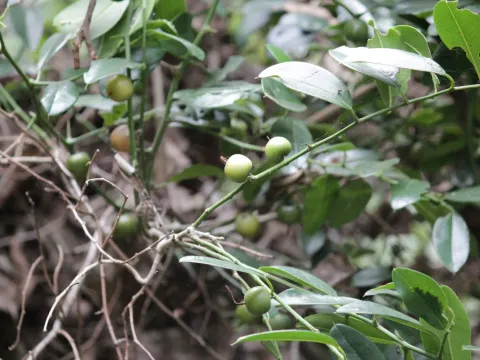
The genus Chaetachme consists of thorny shrubs or small trees belonging to the family Cannabaceae. The most notable species, Chaetachme aristata, is widely distributed throughout the tropical and subtropical regions of Africa.
What the section contains

Chaetachme
This plant thrives in varied environmental conditions, typically found in dense forests, riverine thickets, and coastal vegetation. It demonstrates a high level of environmental plasticity, allowing it to adapt to different light levels, ranging from partial shade to full sun.
Regarding soil requirements, Chaetachme prefers well-drained, nutrient-rich soils. While it does not require intensive agricultural management, it benefits from stable moisture levels, especially during its initial growth phases in its natural habitat.
The botanical structure of the plant features distinct, sharp spines found in the leaf axils, which act as a defense mechanism against herbivores. The foliage is typically evergreen or semi-deciduous depending on the local climate.
As a slow-growing species, Chaetachme is rarely cultivated for large-scale agricultural output. Instead, it is highly valued for its ecological contribution to local biodiversity and its potential use in restorative planting projects.
The primary utility of Chaetachme lies in its dense, durable wood. Local communities have historically harvested the timber for constructing tool handles, framing, and various farm implements that require high mechanical resistance.
Beyond timber, the plant serves a role in traditional medicine. Various parts of the tree, including the bark and roots, are utilized in local healthcare practices to prepare remedies, although these uses are largely artisanal.
The small, edible fruits of the Chaetachme serve as a food source for local bird species, which in turn aids in the dispersal of seeds and ensures the propagation of the species across the landscape.
Due to its thorny nature, the plant is often utilized as a natural barrier or fencing solution in landscape management, providing a living hedge that discourages the movement of livestock or wildlife.
Sustainable harvesting is essential for the preservation of this species. Since it is not a primary crop, commercial exploitation is minimal, and most usage remains strictly within the bounds of local traditional and ecological practices.