
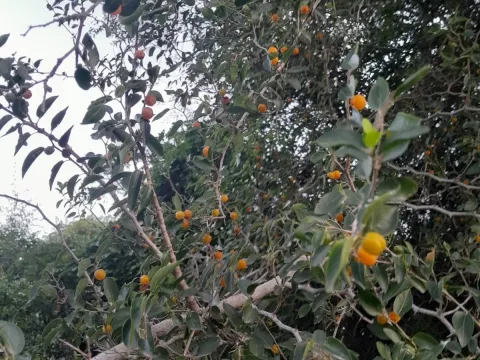
Celtis tala
Celtis tala
Propagation of Celtis tala is most commonly achieved through seeds. In the natural environment, seeds are dispersed by birds that consume the fruit. In nurseries, it is recommended to stratify the seeds for 2–3 months at low temperatures to significantly increase germination rates.
What the section contains
Celtis tala
Sowing in open ground is carried out in the spring once the soil has warmed up to stable positive temperatures. The sowing depth is typically between 2 to 4 centimeters, depending on the soil composition and moisture levels.
When growing seedlings in containers, a well-drained soil mix should be used. The optimal period for transplanting young trees to their permanent location is the beginning or middle of the growing season to ensure the plant adapts before winter.
Soil preparation is a critical step: the site must be well-lit, as the species is highly demanding of sunlight during the early stages of growth. It is recommended to maintain a distance of at least 3-4 meters between rows to ensure proper air circulation.
Young plantings require moderate watering during their first two years. Once established, the plant shows high resilience to adverse conditions and is capable of developing independently without intensive human intervention.
Celtis tala is a species of woody plant belonging to the Cannabaceae family, although it was previously classified within the Ulmaceae family. It is a hardy shrub or small tree native to South America, specifically found in the forests of Argentina and Uruguay.
The plant demonstrates exceptional adaptability to various soil types, including rocky, sandy, and even saline soils. It prefers sunny locations and possesses high drought tolerance, making it suitable for cultivation in arid zones.
Optimal climatic conditions for the species include warm temperate and subtropical climates. Despite its southern origin, some specimens are capable of withstanding brief frost events, although their viability in harsh winter climates remains limited.
The culture features a well-developed root system that helps it anchor on steep slopes. This property makes Celtis tala a valuable plant for anti-erosion measures and the restoration of degraded lands in arid regions.
An important aspect is its tolerance to strong winds. Thanks to its dense wood and rigid leaves, the plant is capable of forming windbreaks, protecting more sensitive agricultural crops from mechanical damage.
The economic use of Celtis tala is primarily aimed at obtaining durable wood, which is valued for its hardness and longevity. Although it is not an intensive industrial crop, it is actively utilized in forestry and silviculture.
The timber of this species is traditionally used for making tools, handles, and in carpentry. Due to its density, it serves as an excellent material for manufacturing products subjected to high mechanical stress.
In agroforestry, Celtis tala plays an important role as an ecosystem component, providing habitat for entomophages and pollinators. The tree's fruit attracts various bird species, contributing to the natural biological control of pests in adjacent fields.
The fruit of Celtis tala also finds applications in traditional medicine and can serve as a food source for wildlife. While fruit yield is not the main goal of cultivation, it indirectly contributes to the economic stability of farming operations.
Maximum biomass productivity is achieved through proper canopy shaping at a young age. This allows for the extraction of not only woody resources but also high-quality material for landscaping and environmental design in arid areas.
Celtis tala is characterized by high resistance to most typical diseases affecting forest species. Under natural conditions, the plant rarely suffers from massive outbreaks of infectious diseases.
Among possible pests, various leaf-eating insects can be identified. These usually do not cause critical damage to mature individuals, though they may pose a threat to young seedlings in nurseries if planting density is high.
Fungal infections may occur under conditions of prolonged rain and poor ventilation. For prevention, it is recommended to avoid overcrowding of plants and to perform timely sanitary pruning of dry or damaged branches.
Root rot is possible only on sites with waterlogging, as the tree strictly does not tolerate excess soil moisture. Site drainage is a mandatory condition for minimizing the risk of root system decay.
Monitoring the condition of the plantings should be conducted regularly during periods of active growth. If signs of leaf deformation or atypical spots appear, standard plant protection methods should be applied, following guidelines for deciduous tree species.