


Reference · Crops
Common hop
Humulus
Common hop (Humulus lupulus), a member of the Cannabaceae family, is a perennial herbaceous climber. Unlike many annual crops, a commercial hop yard is a long-term investment, with plantings typically remaining productive for 15 to 20 years.
3
items
What the section contains
Marketplace
Products in this section · 12


Common hop
The propagation of this crop is primarily done vegetatively using rhizome cuttings taken from healthy, mature plants. The optimal time for planting is early spring, as soon as the soil is workable, allowing the root system to establish before the onset of summer heat.
Cuttings should be planted in trenches at a depth of about 10–15 centimeters. Ensuring proper spacing is crucial to allow for sufficient air circulation, which helps reduce the humidity levels that often promote fungal diseases within the dense canopy of the hops.
A trellis system is essential for hop cultivation. As the bines (the stems of the hop plant) can grow up to 6–8 meters in length, they require sturdy vertical support. The bines are trained to climb these supports in a clockwise direction during the early growth stages.
During the first year, the focus is on developing a robust root system. Commercial-grade yields are generally not expected until the second or third year, when the plant has fully matured and reached its peak potential for cone production.
Hops have specific climatic and soil requirements. They thrive in deep, fertile, well-drained loamy soils. Waterlogged conditions are detrimental to the root system, so selecting a site with good natural or artificial drainage is a primary step in farm preparation.
The plant is a photoperiod-sensitive, sun-loving species that requires long days to initiate flowering. Shading from trees or buildings will significantly reduce the quality and quantity of the hop cones, so fields must be kept open to direct sunlight.
Regular irrigation is vital, particularly during the critical developmental stages in mid-summer. A consistent water supply ensures that the bines grow vigorously and that the cones develop the necessary chemical properties, such as alpha acids and aromatic oils.
Hops prefer a temperate climate with mild temperatures (18–22°C). High winds can easily damage the delicate bines, making windbreaks a standard feature of well-managed hop yards. These windbreaks also help maintain the microclimate necessary for plant health.
Soil fertility management is key to sustained yields. Hops require a steady supply of nutrients, particularly nitrogen for early vegetative growth and potassium and phosphorus during the flowering phase to support the production of lupulin glands.
The yield of common hop is determined by factors such as variety, soil quality, and the effectiveness of the trellis and training system. Average commercial yields typically range from 1,500 to 2,500 kilograms of dried hops per hectare.
Plants reach their peak productivity between the fourth and eighth years of their life cycle. After this period, producers often initiate management practices to rejuvenate the crown or gradually replant sections of the yard to maintain overall efficiency.
For the brewing industry, unfertilized female cones are preferred. The presence of seeds, which occurs if male plants are nearby, decreases the quality of the lupulin and can lead to unwanted off-flavors in the finished beer product.
Environmental conditions during the final maturation stage significantly influence the chemical composition of the cones. Bright, sunny days in August are optimal for the accumulation of essential oils, which are the hallmark of high-quality hop varieties.
After harvesting, post-harvest processing is critical. The cones must be cleaned of debris and dried quickly to prevent spoilage. Proper cooling after the drying phase is equally important to stabilize the volatile compounds before packaging.
Downy mildew is one of the most destructive diseases in hop yards, capable of severely damaging both the foliage and the developing cones. It thrives in humid conditions and can lead to significant crop loss if not managed proactively.
Spider mites and aphids represent the most serious pest threats to hop production. These insects thrive in hot, dry conditions, sucking the sap from leaves and causing them to turn yellow, brittle, and eventually drop, which weakens the entire plant.
- Verticillium wilt: A serious fungal infection affecting the plant's vascular system.
- Aphids: These not only damage the leaves but also transmit viral pathogens.
- Rust: A fungal issue that affects bines during prolonged wet spells.
Integrated Pest Management (IPM) is the standard approach for hop farms. This includes the use of predatory insects to control mite populations and the application of targeted chemical treatments only when pest thresholds are reached.
Cultural practices such as removing basal foliage to improve airflow and destroying diseased crop debris after the harvest are essential for breaking the life cycles of common pathogens and pests that overwinter in the field.
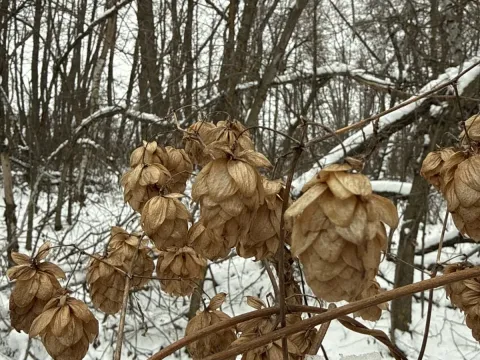
Harvesting is the most time-sensitive phase of hop production. The window of opportunity is narrow, usually occurring in late August or September. Cones are considered ready for picking when they become papery, elastic, and emit a strong, characteristic aroma.
The presence of abundant, golden-yellow lupulin powder inside the scales is the primary indicator of ripeness. If harvest is delayed, the cones may become discolored or lose their potent aromatic qualities, directly impacting their market value.
Modern commercial harvest is highly mechanized, utilizing large machines that sever the bines and transport them to a central location where cones are separated from the leaf material. Manual picking is now limited to small-scale or hobby gardening.
Speed is essential after harvest; picked cones should be moved to a dryer within a few hours. Any delay in processing can cause the hops to heat up due to respiration, leading to rapid deterioration, mold growth, and the loss of precious volatile oils.
Drying is performed at controlled temperatures below 60°C to ensure the hops are stable. Once dried to a moisture content of 10–12%, they are typically pressed into bales or processed into pellets, which preserves their quality for long-term storage.