
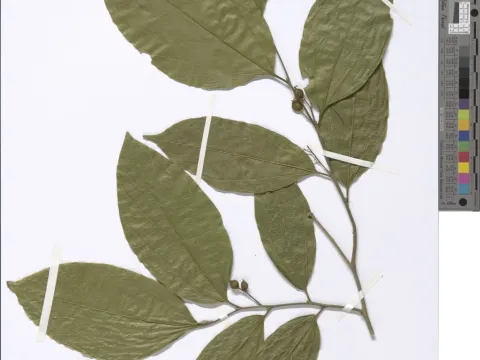
Celtis zenkeri
Celtis zenkeri
Celtis zenkeri is a member of the Cannabaceae family, although it was traditionally classified under Ulmaceae. As a wild-growing tree species, it is not cultivated through traditional agricultural sowing methods.
What the section contains
Celtis zenkeri
In its natural habitat, reproduction occurs via seeds. The fruits, which are small drupes, are dispersed by birds and animals, facilitating the natural spread of the culture across vast territories of the African continent.
For reforestation purposes, seeds are collected after full ripening when the fruit pulp softens. Germination requires a humid and warm environment that mimics the leaf litter of tropical rainforests.
Young seedlings require shade during their early years, as they naturally develop under the canopy of dense tropical forests, protected from direct sunlight.
Planting in permanent locations is carried out at the beginning of the rainy season, which ensures optimal survival rates for the root system and promotes initial growth rates.
Celtis zenkeri prefers humid tropical forests, where annual rainfall is sufficiently high to maintain vegetation throughout the year.
The culture requires fertile, well-drained soils rich in organic matter. It does not tolerate waterlogging and avoids swampy areas, preferring slopes or well-drained plains.
The optimal temperature range for normal growth is between 22 and 30 degrees Celsius. The species does not tolerate even brief frosts, as its biological cycles are adapted strictly to tropical climates.
The tree is considered light-demanding at maturity, but young individuals need moderate diffused light, which dictates their specific growth strategy in multi-layered forest ecosystems.
Agronomic maintenance in forest plantations involves periodic cleaning of the space around young trees to remove weed vegetation that impedes the development of the root system.
The primary economic product is high-quality timber. Yield in the context of forestry is measured by the volume of quality lumber per hectare of forest land at the time of harvest maturity.
The wood of this species is valued for its strength and durability; it is dense and resistant to many environmental factors, which determines its high market value in tropical regions.
Biomass growth rates depend on planting density and soil quality. Intensive care of young trees can significantly shorten the cycle of cultivation to commercial maturity.
In natural conditions, the tree can reach heights of up to 30-40 meters, with trunk diameters often exceeding 80 centimeters, making it a valuable resource for the wood industry.
Regular inventory of forest stocks allows for the prediction of timber harvest volumes while considering the principles of sustainable forest management and ecosystem preservation.
The main threats to the species are related to intensive deforestation in its natural range, which leads to a decline in the population of Celtis zenkeri in the wild.
Among pests, xylophagous insects pose the greatest danger, as they damage the trunk and bark. Their activity can lead to a decrease in wood quality and slowed growth.
Fungal diseases, which develop in high humidity when bark is damaged, can cause wood rot and the death of mature individuals.
Competition from invasive plant species often limits the spread of Celtis zenkeri in areas where the natural forest cover has been disturbed.
Improper logging methods that lead to root system damage of remaining trees are also a factor negatively affecting the health of the entire forest population.
Harvesting of timber is conducted only after the tree reaches a certain age and trunk diameter, which typically takes several decades.
The felling process requires adherence to safety protocols and the use of specialized tools designed for hard tropical wood species.
After felling, the logs undergo primary processing on-site, which includes the removal of branches and bark to facilitate transport and protect against pests during storage.
To ensure resource renewability, selective logging methods are applied, removing only mature trees to preserve the integrity of the forest canopy structure.
The quality of harvested timber is strictly assessed based on defects, insect damage, and fiber density, which determines the subsequent industrial use of the material.