
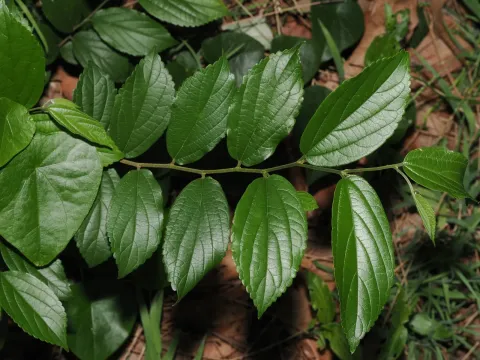
Chinese hackberry
Celtis sinensis
Chinese hackberry (Celtis sinensis) is a deciduous tree belonging to the Cannabaceae family. Native to East Asia, including China, Korea, and Japan, it is highly valued for its robust growth habit and versatility in various landscapes.
What the section contains
Chinese hackberry
The tree thrives in fertile, well-draining soils with a neutral pH. It is highly adaptable to diverse soil types, including sandy or clay-heavy soils, provided that excessive moisture accumulation is avoided during the rainy season.
Ideally, this species should be planted in full sun to ensure a dense, healthy crown development. It is known for its wind tolerance and ability to withstand urban pollution, making it an excellent candidate for street planting and park design.
In terms of climate, Chinese hackberry prefers temperate conditions. While mature trees are moderately drought-tolerant, young plants require a consistent watering schedule to establish a deep root system during their first two years.
Agricultural management involves basic pruning to maintain a strong structure and encourage airflow within the canopy. Mulching the base helps retain soil moisture and suppresses weed competition in the early stages of establishment.
Chinese hackberry is generally resistant to many pests, but it is occasionally susceptible to powdery mildew during humid summer conditions. Preventive measures include ensuring good spacing between trees to improve air circulation.
Aphids and scale insects can sometimes infest young foliage and branches. If left unmanaged, these pests may result in stunted growth and the development of sooty mold, which impairs photosynthesis.
Wood-boring beetles can pose a significant threat to weakened trees. Proper sanitation, such as removing dead or dying branches, is essential to minimize the risk of infestation by these destructive wood-boring pests.
Root rot is a physiological condition caused primarily by poor soil drainage. It manifests as yellowing leaves and canopy dieback, and once established, it is difficult to treat, reinforcing the need for site preparation.
Integrated pest management strategies, including the use of systemic insecticides and biological controls, are effective in maintaining the health of the specimens. Regular monitoring is key to early intervention.