
Petrocallis
Petrocallis
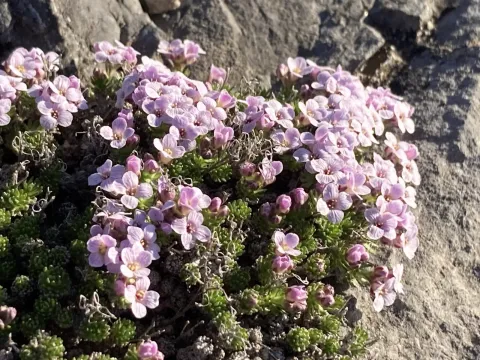
Petrocallis is a genus of small perennial herbs belonging to the Brassicaceae family. It is native to the high-mountain regions of Europe, where it grows in limestone crevices, demonstrating extreme hardiness in cold climates.
What the section contains
Petrocallis
Botanically, it is known for its compact cushion-forming habit, which consists of finely dissected, deep green leaves. This structure allows the plant to survive strong winds and intense ultraviolet light typical of high-altitude habitats.
When cultivating Petrocallis, one must prioritize a cool climate and excellent air circulation. It does not perform well in lowland areas with high heat and humidity, which can cause the plant to collapse or weaken significantly.
The soil requirements are strict: the medium must be highly drainage-oriented, preferably composed of stone chippings, gravel, and a neutral to slightly alkaline soil base. Stagnant water is the primary enemy of the plant's root system.
In terms of agricultural and horticultural use, Petrocallis is highly valued in rock gardening. It is often utilized as a specimen plant in specialized alpine troughs or dedicated crevice gardens due to its refined appearance and beautiful flowering display.
The most significant threat to Petrocallis is fungal rot, which occurs when the plant is kept in conditions that prevent the rapid drying of the soil surface and the root crown area.
Root rot is frequently observed when the potting medium becomes compacted or when the top-dressing of gravel is absent, preventing the base of the plant from staying sufficiently dry during rainy spells.
Pest pressures are generally low for this alpine species, although aphids can occasionally infest new growth during the spring flowering season, requiring careful monitoring and mild intervention.
Weed control is an essential maintenance task, as the slow-growing nature of Petrocallis makes it incapable of competing with invasive species that might quickly overgrow and shade out the cushion.
Effective disease prevention also involves selecting the right slope for planting, which ensures that water flows away from the center of the plant, minimizing the duration of leaf wetness and reducing infection risks.