
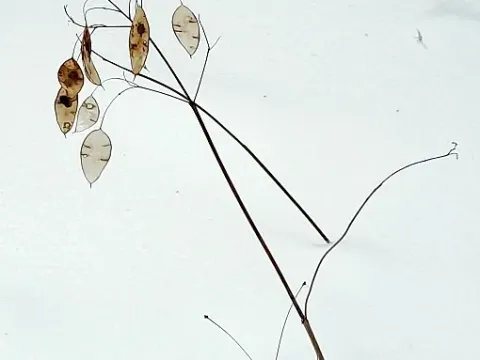
Perennial honesty
Lunaria rediviva
Lunaria rediviva, commonly known as perennial honesty, is a species in the Brassicaceae family. It is a long-lived herbaceous plant that is typically propagated through seed dispersal in autumn.
What the section contains
Perennial honesty
To ensure successful germination, seeds should be sown in late autumn. This allows the seeds to undergo a period of natural winter cold, which is essential for breaking dormancy and stimulating uniform spring growth.
If spring sowing is required, seeds must be stratified by refrigeration for at least 6–8 weeks. This cold treatment mimics the natural cycle and significantly improves the success rate of seedling establishment.
The seeds should be planted at a depth of 1–2 cm in loose, nutrient-rich soil. It is vital to provide enough space between individual plants, ideally spacing them 40 cm apart to allow for proper airflow.
After sowing, keep the soil moist but not waterlogged. The seedlings are relatively slow to grow initially, so marking the planting site is recommended to avoid accidental weeding.
Perennial honesty is naturally adapted to woodland habitats, meaning it thrives in partial to full shade. Direct, intense sunlight can stress the plant and cause leaf scorch during the peak of summer.
The ideal soil profile consists of moisture-retentive, humus-rich soil with a neutral to slightly alkaline pH level. High fertility is key to producing robust, healthy foliage and fragrant, lilac-colored flowers.
Drainage is a critical factor in the cultivation of this species. While it enjoys consistent moisture, stagnant water in the soil will rapidly lead to root decay and the death of the plant.
This plant is exceptionally cold-hardy and requires no special winter protection in typical temperate climates. Mulching with organic matter helps stabilize soil temperature and moisture levels throughout the growing season.
Regular maintenance involves removing spent flower stalks if seed production is not desired. This allows the plant to focus its energy on building a stronger root system for the subsequent year.
Slugs and snails are the most frequent pests, particularly in the spring when new leaves emerge. Physical barriers or organic molluscicides are effective methods for protecting the young, succulent foliage.
Fungal issues, such as powdery mildew, may occur in conditions of poor air circulation or prolonged drought combined with high humidity. Proper plant spacing is the best preventative measure against these infections.
Root rot is often a symptom of poor drainage or overwatering. If the planting site tends to hold water, amendments like sand or gravel should be mixed into the substrate to improve soil structure.
Crucifer flea beetles can occasionally attack the leaves. Monitoring the plants in spring and applying appropriate biological control measures is recommended if significant leaf damage is observed.
Providing a balanced environment with sufficient organic matter and correct moisture levels typically prevents most common diseases, allowing the plant to reach its full potential in a garden setting.