
Pale wallflower
Erysimum ochroleucum
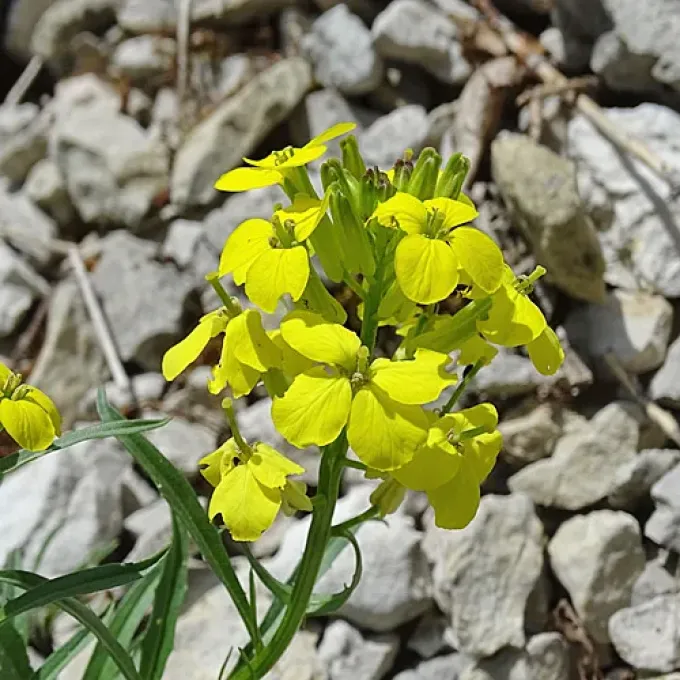
Description
Sowing dates
The pale wallflower (Erysimum ochroleucum) is a perennial herb belonging to the Brassicaceae family. It is typically sown in late autumn or early spring, as soon as the soil becomes workable and has warmed up sufficiently for germination.
Autumn sowing is often preferred because natural winter stratification improves seed germination rates in the following spring. Seeds should be sown at a shallow depth of approximately 1–1.5 cm in well-drained, prepared soil to ensure optimal sprout emergence.
When seeding in the spring, it is crucial to ensure good soil-to-seed contact. After sowing, light rolling of the soil surface helps to retain moisture and promotes uniform development of the seedlings across the field.
Maintaining row spacing of 30–40 cm allows for mechanical weeding and proper airflow between plants, which is essential for minimizing humidity-related issues. This spacing also supports the development of a healthy, vigorous root system.
Crop rotation is vital. Since this plant is a member of the cabbage family, it should not be planted on sites previously occupied by other Brassicaceae crops for at least 3 to 4 years to avoid soil-borne disease buildup.
Growing requirements
This crop thrives in open, sunny locations where it can receive maximum solar radiation, which is necessary for the accumulation of active phytochemical compounds. Shady environments lead to stunted growth and reduced plant quality.
Well-drained sandy loam or fertile loamy soils are ideal. The pale wallflower prefers a neutral to slightly alkaline pH; acidic soils must be amended with lime before planting to create a suitable growing environment.
While the plant shows good tolerance to moderate drought, it requires consistent moisture during the early vegetative phase and the period of flower formation. Excessive irrigation or waterlogged soil should be avoided at all costs.
Nutrient management focuses on balanced fertilization. Providing adequate levels of phosphorus and potassium helps the plant establish a strong foundation before winter, ensuring it survives the colder months without damage.
Regular soil cultivation between the rows helps to maintain aeration. Healthy, oxygenated soil is necessary for nutrient uptake and prevents the compaction that often hinders root development in perennial crops.
Main diseases and pests
Cruciferous flea beetles are the most significant threat to young plants, particularly in the spring. They can quickly cause extensive damage to leaves, requiring constant vigilance and timely intervention with protective measures.
Clubroot is a serious fungal disease that attacks the root system, potentially causing crop failure. Proper site selection and avoiding previous cabbage-family hosts are the most effective preventative strategies against this pathogen.
Aphids can infest the inflorescences, causing damage to the floral parts and potentially serving as vectors for viruses. Monitoring the plants during the flowering phase is essential for maintaining yield quality.
Powdery mildew often manifests during periods of high humidity and warm temperatures. Improving air circulation by adjusting plant density and removing plant debris from the previous season can significantly reduce the risk of outbreaks.
- Cruciferous flea beetles
- Clubroot disease
- Aphids
- Powdery mildew
- Root rot pathogens