
Petrocallis pyrenaica
Petrocallis pyrenaica
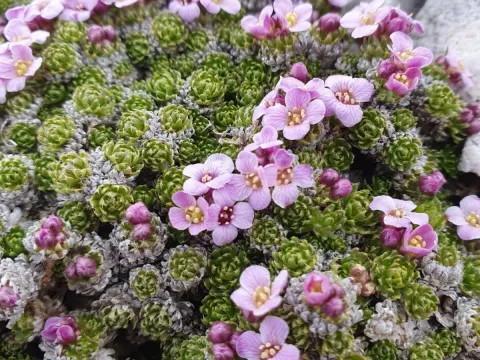
Petrocallis pyrenaica, commonly known as Pyrenean whitlow-grass, is a perennial herbaceous plant belonging to the Brassicaceae family. It is native to the high mountain ranges of Europe, including the Pyrenees, the Alps, and the Carpathians, where it typically inhabits limestone crevices and stony slopes at high altitudes.
What the section contains
Petrocallis pyrenaica
The plant is botanically characterized by its cushion-forming growth habit, which allows it to withstand harsh mountain winds and cold temperatures. Its leaves are deeply lobed and arranged in tight rosettes, while its delicate flowers, which appear in late spring, create a dense, carpet-like display of soft pink or white.
In terms of cultivation, this species requires a specific alpine-style environment to thrive in a garden setting. It demands full sun exposure and a substrate that provides excellent drainage; any accumulation of water around the root neck is highly detrimental and will quickly lead to plant mortality.
The soil should ideally be gritty, mineral-rich, and slightly alkaline, mimicking the limestone screes of its natural habitat. It requires minimal fertilization, as high levels of nutrients can cause the plant to grow too rapidly, destroying its natural, compact, cushion-like structure and reducing its longevity.
This species is primarily utilized for ornamental purposes in specialized rock gardens and troughs. It is highly prized by alpine plant enthusiasts for its slow-growing, resilient nature and the unique aesthetic value it provides when placed among large stones or in alpine scree garden beds.
The primary threats to Petrocallis pyrenaica are fungal diseases, such as root rot, which are triggered by poor drainage or excessive humidity. Growers are advised to use a top dressing of fine gravel or grit to keep the foliage and crown of the plant away from moisture and to improve air circulation.