
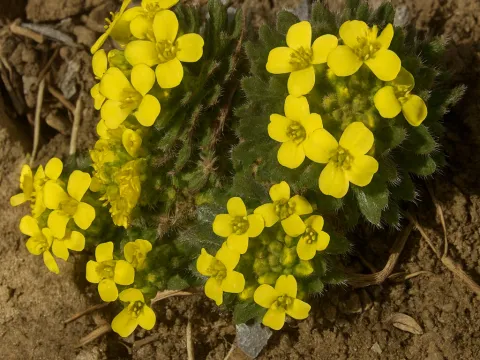
Parnassian whitlow-grass
Draba parnassica
Parnassian whitlow-grass (Draba parnassica) is a perennial herbaceous plant belonging to the large Brassicaceae family. It is an endemic species primarily found in the alpine elevations of the Greek mountains, specifically Mount Parnassus, where it grows in harsh, rocky conditions.
What the section contains
Parnassian whitlow-grass
The plant is characterized by its tight, low-growing rosettes of lanceolate or spatulate leaves, making it a popular choice for rock gardens and alpine beds. Its compact growth habit is an evolutionary adaptation to the intense winds and cold temperatures of its natural habitat.
For successful cultivation, the plant requires a substrate that mimics its native environment: well-draining, stony, or sandy soil with neutral or slightly alkaline pH. Drainage is the most important factor, as any water accumulation around the crown will lead to rot.
The species demands a position with ample sunlight and excellent air circulation. In regions with hot and humid summers, providing some afternoon shade or placing the plant in a position where it is protected from extreme heat is essential for its survival.
Cultivation practices should emphasize minimal irrigation during the dormant season. The plant's hardiness allows it to survive low temperatures, but it is sensitive to the combination of winter dampness and mild temperatures, which can cause foliage decay.
Fungal diseases are the primary threat to the health of Draba parnassica, particularly root rots triggered by waterlogged conditions. Ensuring a porous soil structure is the best prophylactic measure against these pathogens.
Pests typical of the Brassicaceae family, such as flea beetles, can attack the plant during the early growth stages in spring. Keeping the area free of debris and monitor for early signs of damage is standard protocol for gardeners.
Slugs and snails present a significant risk to the succulent rosettes, especially during damp weather. It is recommended to use gravel mulch around the plants to deter these mollusks and prevent direct contact between the leaves and wet soil.
Poor air circulation increases the risk of mildew and other infections. If the plant is grown in containers, it is vital to ensure that the pot size is appropriate and that the drainage holes are never obstructed.
Monitoring for signs of wilting is crucial. If wilting occurs despite proper irrigation, it may indicate a deeper problem with root integrity, necessitating an immediate change in the soil moisture regime or an assessment for potential pathogens.