
Pennsylvania bittercress
Cardamine pensylvanica
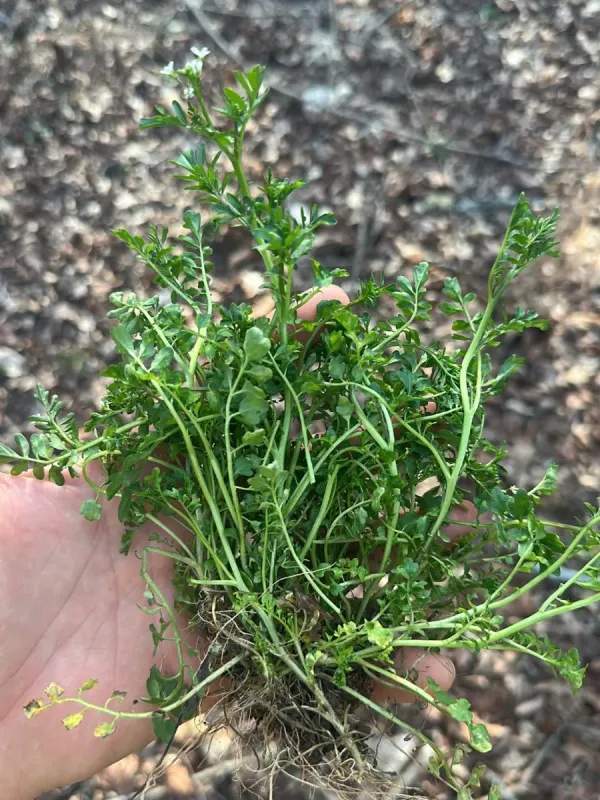
Description
Growing requirements
Pennsylvania bittercress (Cardamine pensylvanica) is an herbaceous annual or biennial plant belonging to the Brassicaceae family. It is native to North America and typically thrives in wet, shaded habitats such as stream banks and moist forest floors.
The plant requires consistently moist, fertile soil to reach its full vegetative potential. It prefers partial shade, as direct sunlight in hot, dry conditions can inhibit the development of its basal rosette leaves and lead to premature bolting.
Botanically, it is characterized by pinnately compound leaves and small, white, four-petaled flowers produced in racemes. It spreads effectively through seed dispersal, often appearing as an opportunistic colonizer in damp agricultural areas.
The species exhibits high tolerance for cool weather, allowing it to begin vegetative growth in early spring. Its adaptability to varying moisture levels makes it a persistent presence in habitats that are less suitable for other crop species.
Proper management of this species in an agricultural setting involves soil drainage improvements. By maintaining the soil moisture at levels optimal for primary crops, growers can significantly reduce the competitiveness of Cardamine pensylvanica.
Main diseases and pests
As a member of the Brassicaceae family, Pennsylvania bittercress is susceptible to various fungal pathogens, such as downy mildew, which are common in the moist environments where this plant prefers to grow.
Insect pests such as flea beetles represent a significant threat, especially during the seedling stage. These insects feed on the leaf tissues, creating small holes that can serve as entry points for secondary bacterial or fungal infections.
Caterpillars of various lepidopteran species, including the cabbage looper, may utilize the plant as a host, potentially serving as a reservoir for pest populations that could move into adjacent commercial cruciferous crops.
Slugs are particularly problematic for this species due to their preference for the moist microclimates where the plant resides. They can cause severe defoliation of the plant's rosettes during damp weather.
Control strategies for the plant include integrated pest management practices. These involve field sanitation, consistent monitoring of pest density, and the implementation of cultural practices that minimize favorable conditions for both the weed and its associated pests.