
Pringlea
Pringlea
Pringlea, commonly known as Kerguelen cabbage, is a wild-growing species that is not cultivated for large-scale agricultural use.
What the section contains

Pringlea
Reproduction in its native habitat occurs via seeds, which are naturally dispersed by wind and local seabirds across the island terrain.
Attempts to introduce this plant to non-subantarctic environments have proven difficult due to its highly specific climate requirements.
Seeds require consistent moisture and cold temperatures to germinate successfully in their natural rocky soil conditions.
The life cycle of the plant is slow and adapted to harsh conditions, making it unsuitable for rapid agricultural crop rotation.
The plant belongs to the Brassicaceae family and is a rare endemic species native to the Kerguelen Islands in the Southern Ocean.
It is perfectly adapted to survive constant high-speed winds and consistently cool temperatures found in subantarctic regions.
Soil requirements include high organic matter content, often enriched by guano from dense colonies of seabirds living in the area.
Pringlea thrives in open environments where there is constant access to maritime air and high atmospheric humidity.
The optimal temperature for growth remains within a very narrow range, reflecting its adaptation to isolated oceanic latitudes.
The biomass production of Pringlea is relatively slow due to the short growing season and the harsh environmental conditions of its habitat.
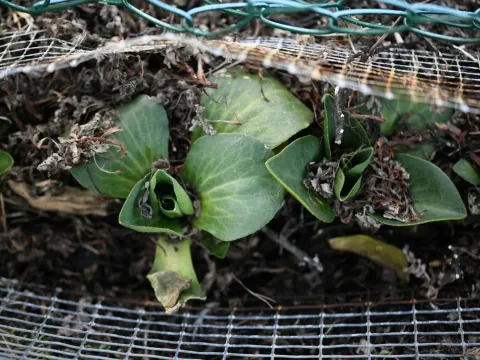
The plant produces large, thick leaves in a basal rosette, which contain high levels of vitamins and nutrients beneficial for local survival.
While the plant can regenerate leaves if harvested carefully, the overall yield per square meter is low compared to commercial cabbages.
Historical records note that the leaves were harvested by whalers and explorers to replenish nutritional stocks on long voyages.
Commercial yield metrics do not exist as the species is preserved in its wild state rather than cultivated for trade.
The most significant threat to Pringlea populations has been the introduction of invasive species, particularly rabbits, to the Kerguelen Islands.
These herbivores graze heavily on the Pringlea plants, leading to a substantial decrease in the species' natural range and density.
Information on specific agricultural diseases is limited, as the plant exists only in remote, protected ecosystems.
Competition from non-native plant species further complicates the survival of this endemic cabbage in changing ecosystems.
Climate change poses a potential threat to the stability of the fragile subantarctic plant communities where Pringlea grows.
Historically, harvesting was a critical activity for sailors who used the leaves as an anti-scorbutic remedy, earning its name antiscorbutica.
Harvesters would selectively remove older leaves while leaving the center of the rosette intact to ensure the plant would continue to grow.
The harvested leaves are edible and have a characteristic flavor similar to common cabbage with a subtle, spicy mustard undertone.
Traditional collection methods focused on sustainability, ensuring that the local wild population could recover after each seasonal harvest.
Today, harvesting is strictly prohibited, as the plant is protected within the regional nature reserves of the French Southern Territories.