
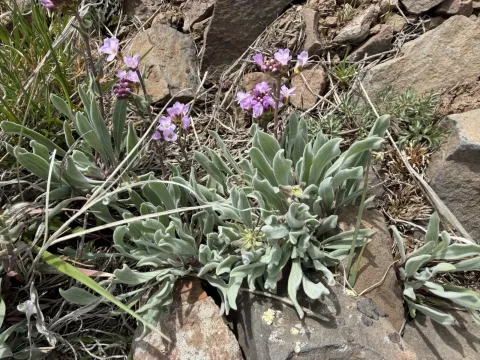
Phoenicaulis
Phoenicaulis
Phoenicaulis belongs to the Brassicaceae family. In the wild, it is a perennial herbaceous plant that requires specific environmental conditions for seed germination.
What the section contains

Phoenicaulis
Seeds of this crop are usually sown before winter or subjected to stratification, as they need a period of low temperatures to break dormancy.
During spring sowing, it is necessary to ensure stable moisture of the substrate to prevent the embryo from drying out during the critical phase of development.
The sowing depth of the seeds is no more than 0.5–1 cm, as the seeds are small and require shallow placement for adequate light access.
Optimal timing for sowing in natural habitats occurs in early spring, when the soil is maximally saturated with snowmelt water.
The plant originates from the western regions of North America, where it has adapted to life on open, well-drained rocky slopes.
Phoenicaulis prefers soils with low humus content but excellent water permeability, which eliminates water stagnation in the root zone.
A key requirement is high intensity of solar radiation; in the shade, the plant loses its appeal and reduces the intensity of vegetation.
The crop is extremely sensitive to excessive nitrogen nutrition, which provokes excessive leaf growth to the detriment of root system development.
During the period of active growth, the plant requires moderate watering, however, in the summer dormant phase, it is able to withstand long periods of drought.
The main threat to Phoenicaulis is fungal diseases caused by excessive soil moisture, such as root rot and fusarium.
Pests typical of the Brassicaceae family, such as flea beetles, can damage young seedlings and leaves at the beginning of the growing season.
Slugs and snails are active in rainy weather, causing mechanical damage to leaf rosettes, which weakens the plant's immune system.
If agricultural practices are violated, powdery mildew infection is possible, especially if plantings are too dense and do not ventilate properly.
To protect against pests, it is recommended to use preventive methods such as gravel mulching, which limits insect access to the base of the stem.