
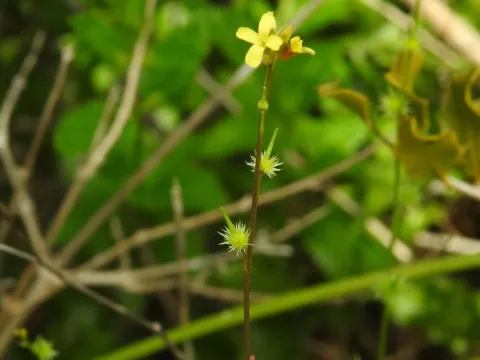
Succowia
Succowia
Succowia is an annual herbaceous plant whose life cycle is synchronized with the Mediterranean climate. Seeds are typically sown in autumn, as the plant is adapted to germinate under moderate temperatures with sufficient rainfall.
What the section contains

Succowia
Under natural conditions, germination occurs after the first autumn rains, allowing seedlings to establish a root system before the onset of winter temperatures. Cultivated crops require similar conditions to ensure successful establishment.
The optimal temperature range for active germination and seedling growth is between 10 and 15 degrees Celsius. Being sensitive to extreme cold, the plant requires protection in regions with harsh winter climates.
Planting patterns should prioritize high light exposure, as the plant is highly sensitive to shading, which significantly impacts its growth and overall biomass production.
Seeds should be sown at a shallow depth of 1 to 2 centimeters to ensure rapid emergence and to prevent the seedling from exhausting its energy reserves before breaking through the soil surface.
As a member of the Brassicaceae family, Succowia thrives in well-drained, calcareous soils, which are characteristic of its native rocky Mediterranean habitats.
Optimal growth requires full sun exposure, as any significant shading will lead to etiolation and a marked decrease in reproductive development and seed production.
While the species exhibits high drought tolerance during its active vegetative stage, it requires consistent moisture during flowering and pod development to ensure high yield and avoid flower abortion.
Soil pH should be neutral to slightly alkaline. Excessive nitrogen fertilization is discouraged, as it tends to stimulate disproportionate vegetative growth at the expense of seed formation.
The plant is highly susceptible to root rot in waterlogged conditions; therefore, fields must be carefully selected to ensure excellent drainage and avoid low-lying areas where water may accumulate.
Like many other Brassicaceae species, Succowia is frequently attacked by flea beetles, which can cause severe damage during the seedling and cotyledon stages.
High humidity levels may lead to the development of fungal diseases, such as downy mildew, which affects photosynthetic capacity by damaging the leaf surface.
Aphids are common pests that concentrate on flower spikes and young shoots, sucking sap and significantly reducing the plant's overall vigor and seed set.
To prevent soil-borne pathogens like clubroot, strict crop rotation schedules must be followed, ensuring that the plant is not rotated with other related cruciferous crops.
Integrated pest management, including monitoring and maintaining appropriate plant spacing to ensure proper airflow, is essential for minimizing the risk of disease and pest outbreaks.
Harvesting of Succowia begins when the pods reach full maturity and turn from green to a distinct brownish color, signaling that the seeds have reached their peak physiological development.
Timely harvest is critical as the pods are prone to dehiscing upon maturity, which can lead to significant seed loss due to natural shattering if the window for harvest is missed.
Harvesting should ideally be conducted in the early morning when dew and ambient humidity are higher, which helps prevent premature pod splitting during manual or mechanical collection.
Post-harvest, seeds must be dried in a well-ventilated, shaded area to reduce moisture content to safe levels for storage, preventing spoilage and maintaining seed viability.
Final cleaning involves removing chaff and debris, ensuring that the final harvest is free from contamination and suitable for its intended agronomic or research use.