
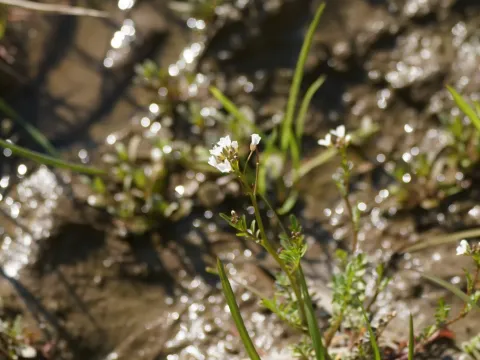
Small-flowered bittercress
Cardamine parviflora
Small-flowered bittercress (Cardamine parviflora) is an annual herb belonging to the Brassicaceae family. It is a distinct botanical species characterized by its slender stature and preference for moist, temperate habitats across Europe, Asia, and North America, often appearing as a transient weed in agriculture.
What the section contains
Small-flowered bittercress
The origin of the species is linked to the Holarctic floristic kingdom, where it effectively colonizes riparian zones, damp meadows, and disturbed soil. Its adaptability allows it to persist in various ecological niches, provided that moisture levels remain consistent throughout its short life cycle.
Botanically, it features delicate, pinnately compound leaves and small, white, cruciferous flowers. The root system is relatively shallow, which dictates its preference for moisture-retaining soils. It typically completes its flowering and seed-setting stages before the onset of the summer heat.
Regarding cultivation requirements, the plant thrives in rich, well-hydrated soils and prefers cool, semi-shaded environments. It is highly sensitive to drought; therefore, maintaining soil moisture is the primary factor for its successful growth in any controlled agricultural or experimental setting.
While not a major commercial crop, it is of interest in agro-ecology for its potential as an early-season nectar source for pollinators. Additionally, researchers study the plant for its biological properties and its ability to act as a bioindicator for soil hydration levels in diverse landscapes.
The primary threats include fungal diseases such as white rust and downy mildew, which flourish under high-humidity conditions. Insect pests such as flea beetles are known to cause significant damage to the foliage during the early stages of plant development.