
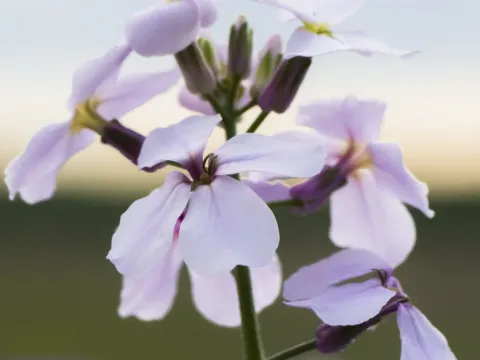
Snow Hesperis
Hesperis nivea
Snow Hesperis (Hesperis nivea) is a member of the Brassicaceae family. In temperate climates, sowing in open ground is best performed in spring, typically between April and May, once the soil warms up.
What the section contains
Snow Hesperis
Autumn sowing is also feasible in late October. This ensures natural stratification, which leads to stronger and more resilient seedlings when spring arrives.
Seeds should be sown at a shallow depth of 1–2 cm. It is important to maintain a planting distance of approximately 30–40 cm to allow the plant to develop its full rosette.
Greenhouse propagation via seedlings is an option for early flowering. Seeds are started in late March and transplanted outdoors after the risk of frost has passed.
Proper seed-to-soil contact is essential for germination, followed by light mulching to maintain humidity levels during the initial growth phase.
The plant thrives in open, sun-exposed locations but can tolerate partial shade during the most intense afternoon hours.
Fertile soils with a neutral to slightly alkaline reaction are ideal. The crop is sensitive to waterlogging; therefore, well-drained soil is non-negotiable for success.
Loam or sandy loam soils enriched with organic matter provide the best nutritional foundation for the rapid development of this species.
Moderate but consistent irrigation is required, particularly during the floral development stage, to prevent plant stress.
Winter hardiness is moderate, and in harsher regions, protective covering with mulch or branches is recommended to shield the root system.
The primary concern for this crop is fungal infection, particularly powdery mildew, often triggered by excessive moisture and poor air circulation.
Preventive measures include wide spacing and the avoidance of overhead irrigation, which keeps foliage dry and minimizes fungal growth.
Cruciferous pests, such as flea beetles, pose a threat to young seedlings and can cause significant damage if not monitored regularly.
Integrated pest management, including natural repellents or selective insecticides, is recommended when pest population thresholds are exceeded.
Consistent weeding is vital not only to reduce competition for nutrients but also to improve airflow around the base of the plant.