
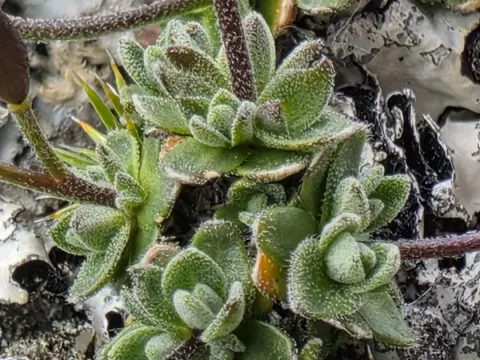
Snow whitlow-grass
Draba nivalis
Snow whitlow-grass (Draba nivalis) is a small perennial herbaceous plant belonging to the Brassicaceae family. It is a highly specialized species adapted to the harsh environments of arctic, subarctic, and alpine mountain ranges.
What the section contains
Snow whitlow-grass
The plant is native to high-latitude regions and mountain peaks across the Northern Hemisphere. Its distribution is limited to rocky outcrops, gravelly slopes, and tundra, where it competes successfully in low-nutrient soil conditions.
Botanically, Draba nivalis is characterized by its small, dense rosettes and persistent foliage. The leaves are typically covered in fine, branched hairs, which are an evolutionary adaptation to shield the plant from harsh, drying winds and intense light at high altitudes.
Growing this species requires strict attention to soil composition. It demands excellent drainage and a mineral-based substrate, as stagnant moisture is fatal to the plant. It performs best in full sunlight, mimicking its native habitat exposure.
In terms of usage, the plant is primarily cultivated by enthusiasts of alpine flora and rock garden designers. It is not considered an agricultural crop in the traditional sense, but it holds value in botanical research regarding cold-tolerance mechanisms.
The most significant threat to the survival of Draba nivalis is fungal rot, which is triggered by excessive humidity and poorly drained soil conditions during the growing season.
Crown rot remains a major issue for plants kept in cultivation settings where environmental parameters are not sufficiently controlled, specifically where there is a lack of airflow around the leaf rosette.
Insects like flea beetles, which commonly affect other Brassicaceae, can cause damage to the foliage, especially when the plant is stressed by unseasonal heat or moisture.
Gastropods such as slugs can also graze on the tender leaves of the plant, significantly reducing the vigor of the rosettes and hindering the plant's ability to store resources for winter dormancy.
Mitigation strategies include providing a gritty top-dressing around the base to ensure the crown remains dry and maintaining a balanced exposure to wind and light to prevent local humidity buildup.