
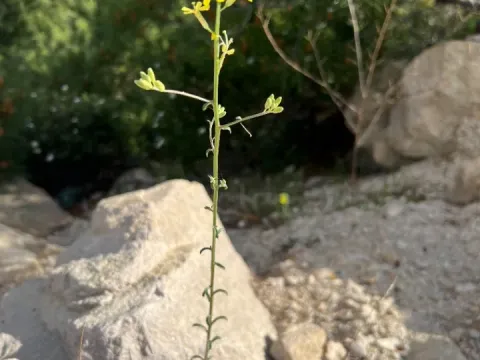
Smyrna wallflower
Erysimum smyrnaeum
The Smyrna wallflower is typically grown as a biennial or perennial herb, requiring specific timing for field establishment. The primary sowing period is during the early spring or late autumn, ensuring the seeds can adapt to local climatic cycles.
What the section contains
Smyrna wallflower
Seeds of this species exhibit good vigor but require consistent moisture for germination. For successful establishment, the soil temperature should ideally range between 10 and 15 degrees Celsius. Ensuring uniform seed distribution is crucial for achieving a dense and productive plant stand.
Correct seeding depth is a fundamental aspect of its agrotechnics; seeds should be sown at a depth of no more than 1.5 centimeters. Placing them deeper often results in poor emergence and a significant reduction in the final plant density, which is difficult to correct later in the season.
For industrial cultivation, row spacing of 40 to 50 centimeters is recommended. This setup facilitates mechanical weeding and aeration, which are vital for the crop's development in its first year, especially when the plant is focusing on vegetative growth and forming a leaf rosette.
Applying balanced fertilizer at the time of sowing can help strengthen the root system. Phosphorus and nitrogen inputs are particularly beneficial in the initial stages, allowing the plants to survive winter dormancy more effectively and start rapid spring growth in the second year.
As a member of the Brassicaceae family, the Smyrna wallflower thrives in well-drained, fertile soils. Light loams and sandy soils are preferred, as these provide the aeration needed to prevent root-related issues and encourage deep root exploration.
The crop is known for its remarkable drought tolerance once established, making it a viable option for regions where water scarcity is an issue. However, adequate moisture remains essential during the flowering stage to maximize biomass production and subsequent seed yield.
Full sun exposure is a non-negotiable requirement for this species. Shade leads to elongated stems, reduced concentrations of bioactive compounds, and increased susceptibility to various plant pathogens, ultimately compromising the quality of the harvest.
Soil pH should ideally be maintained between 6.5 and 7.5. Acidic soils may require pre-planting liming to adjust the reaction, which helps in preventing nutrient deficiency and creating an environment unfavorable for soil-borne pathogens common to the Brassicaceae group.
Agrotechnical maintenance includes regular inter-row cultivation to keep the surface loose and weed-free. Weed competition is most damaging in the early phases of growth, so keeping the field clean during the first months is vital for the crop to establish dominance.
Crucifer flea beetles are the most frequent threat to the Smyrna wallflower, particularly in the spring. They feed on young leaves and can decimate a young crop in a very short time, making early pest detection and timely intervention highly necessary for successful farming.
Fungal diseases, including powdery mildew and various types of leaf spots, can cause significant damage in humid conditions. Managing air circulation through proper plant spacing is a primary preventative strategy to minimize the spread of these pathogens across the field.
Clubroot, a common problem in the Brassicaceae family, can significantly affect the root system. Because the pathogen can persist in the soil for several years, a strict crop rotation strategy is required to keep fields productive and prevent permanent soil contamination.
Aphid infestations may occur during the development of flower spikes. These pests suck nutrients from the plant, causing stunted growth and reducing yield. Targeted control using selective insecticides is recommended if the population density reaches the economic injury level.
- Establish strict crop rotation to avoid Brassicaceae pathogens.
- Monitor for flea beetle activity during the seedling stage.
- Maintain optimal field density to improve air circulation.
- Perform regular soil testing to adjust nutrient and pH levels.