
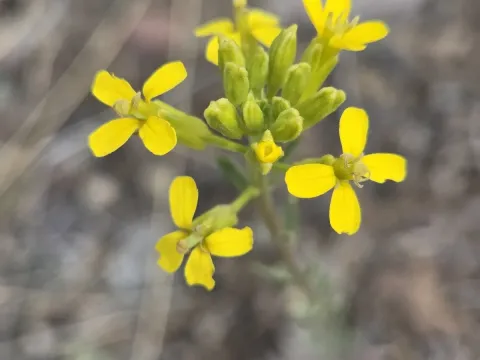
Small-flowered wallflower
Erysimum inconspicuum
The small-flowered wallflower belongs to the Brassicaceae family and is an herbaceous perennial plant adapted to various environmental conditions.
What the section contains
Small-flowered wallflower
Sowing should be performed in early spring as soon as the soil is workable, typically ensuring a depth of about 1 to 2 centimeters to ensure proper germination.
The seeding rate must be precisely calibrated to achieve an optimal plant population density, which prevents excessive competition between individual plants.
Direct seeding into a well-prepared seedbed is the most effective method for establishing a successful crop stand in open fields.
Germination is highly dependent on consistent moisture, requiring farmers to monitor weather patterns closely during the initial establishment phase.
This species thrives in well-drained, fertile soils with a neutral pH, and it is sensitive to the accumulation of excess water in the root zone.
Sunlight exposure is a critical factor for development, as shading can lead to elongated, weak stems and reduced overall biomass production.
The plant demonstrates good tolerance to moderate environmental stress, though supplementary irrigation is advisable during extreme drought events.
Proper field management includes weed control, particularly during the first months of growth, when the seedlings are most susceptible to competition.
Nutrient management focusing on potassium and phosphorus levels ensures better resistance to abiotic stress and improves seed viability.
Cruciferous pests, such as flea beetles and aphids, are the primary biological threats that can cause significant economic loss to the crop.
Fungal diseases like downy mildew and root rot typically occur when fields are poorly drained or during prolonged periods of high humidity.
Integrated pest management strategies should be implemented to monitor insect thresholds before any chemical interventions are considered.
Crop rotation remains the most effective prophylactic measure against soil-borne pathogens that target the Brassicaceae family.
Biological controls and selective insecticides are recommended to maintain the ecological balance while protecting the crop from major outbreaks.