
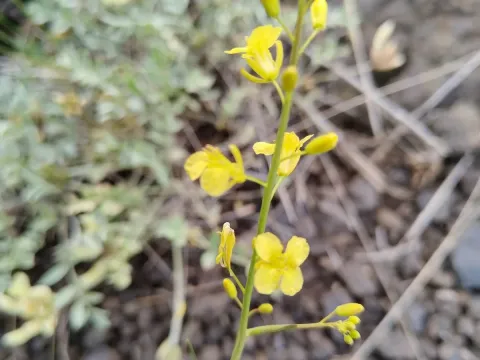
Sisymbrium polymorphum
Sisymbrium polymorphum
Sisymbrium polymorphum is a perennial herbaceous plant belonging to the Brassicaceae family. Naturally found in the steppe regions of Eurasia, it has adapted to survive in open, sun-drenched environments with moderate precipitation levels.
What the section contains
Sisymbrium polymorphum
The sowing period for this crop typically begins in the spring when soil temperatures reach 8–10 degrees Celsius. Planting early allows the root system to establish effectively, utilizing soil moisture reserves before the onset of summer heat.
Optimal crop management suggests a row spacing of 30–45 centimeters to ensure each plant receives adequate light and nutrients. This spacing also facilitates mechanical weed control and helps manage the density of the canopy.
Seed depth should be kept shallow, specifically 1–2 centimeters, to ensure uniform emergence. Proper seedbed preparation is essential, as the soil should be fine-textured to allow for good seed-to-soil contact during germination.
Field monitoring during the initial 14 days post-planting is crucial to ensure germination rates. Consistent soil moisture levels during this period significantly contribute to a healthy and uniform start for the crop.
The plant exhibits high levels of drought and cold tolerance, making it a robust option for continental climates. It thrives on loamy or sandy-loam soils with a neutral pH, avoiding waterlogged conditions.
Sunlight is a primary requirement, as Sisymbrium polymorphum is a light-demanding species. Excessive shade will significantly reduce both plant health and the eventual accumulation of oils within the seeds.
Balanced fertilization is necessary, focusing primarily on phosphorus and potassium to support structural growth and seed development. Nitrogen should be applied carefully to avoid excessive vegetative growth at the expense of reproductive output.
Optimal growth temperatures range from 20 to 25 degrees Celsius. The crop is capable of surviving significant temperature fluctuations, which demonstrates its suitability for diverse agricultural zones in the Northern Hemisphere.
Proper drainage of the field site is mandatory, as this plant is sensitive to hypoxia in the roots. Selecting fields with a moderate slope or excellent soil structure helps prevent water accumulation after heavy rains.
Sisymbrium polymorphum is primarily valued as a potential source for industrial-grade oils. These oils are useful in various chemical applications, making the seeds a target for specialized industrial cultivation.
Under intensive management, yield potential ranges from 1.5 to 2.5 metric tons per hectare. Success relies on meticulous timing of agronomic interventions throughout the growing cycle.
The green mass of the plant can serve as a green manure or cover crop, which improves soil porosity and structure. Its deep root system is particularly effective at cycling nutrients from deeper soil layers to the surface.
Interest in using the plant for animal feed additives exists, though further research into the secondary compounds of the forage is required to ensure safety. This dual-use potential adds value to the economic proposition of the crop.
Consistent harvest results are usually achieved by rotating this crop with cereals. This rotation reduces pest pressure and provides a break in the biological cycles of common Brassicaceae pathogens.
Common diseases affecting this crop include powdery mildew and white rust, typically emerging under conditions of high humidity or poor field aeration. Preventing these requires careful irrigation management.
Insect pests like the flea beetle represent the most significant threat, especially to young seedlings. Aphid infestations during the flowering stage may also lead to localized damage and reduced seed quality.
Integrated pest management, including biological controls and targeted chemical applications, is recommended when pest thresholds are exceeded. Regular scouting of the field is necessary to make informed decisions.
Weed management is vital in the first few weeks post-emergence. Mechanical cultivation between rows is often the most effective way to eliminate competition for resources during the plant's slow initial growth phase.
Maintaining a strict crop rotation schedule prevents the build-up of soil-borne pathogens. Avoiding the planting of Sisymbrium polymorphum in fields where other brassica crops were grown recently is a fundamental practice.
Harvesting is performed via direct combining once the seeds reach physiological maturity. It is critical to target a moisture content of 12–14 percent to ensure the longevity of the oilseed quality.
Minimizing shattering losses is the main priority during harvest. Using modern combine settings, such as adjusting the threshing drum speed, helps to prevent mechanical damage to the delicate seeds during separation.
Post-harvest cleaning must be swift to remove debris and moisture. The seeds should be dried immediately to prevent mold growth, which is a major concern when storing oilseeds with high moisture content.
Storage facilities should be cool, dry, and well-ventilated. Proper storage practices preserve the chemical integrity of the oils, ensuring the product remains suitable for industrial market requirements.
Equipment maintenance before the harvest season ensures that mechanical failures do not delay the collection process. Timely harvesting is essential to avoid exposure to weather-related risks that can degrade seed quality.