
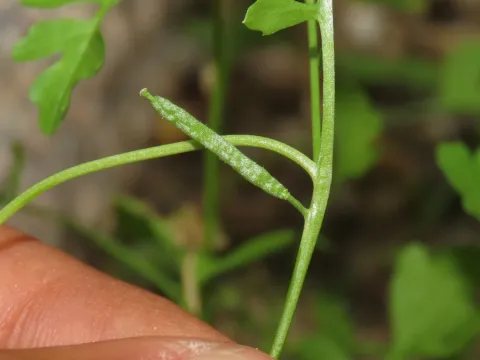
Smooth yellowcress
Rorippa teres
Smooth yellowcress (Rorippa teres) is a member of the Brassicaceae family, primarily adapted to wetland and riparian habitats across its natural distribution range.
What the section contains
Smooth yellowcress
The propagation of this crop relies on seeds, which naturally germinate in moist, disturbed soils, typically following seasonal flooding or high moisture levels.
In an agricultural setting, seeds should be sown in early spring, as soon as the threat of severe frost has passed and soil moisture is at its peak.
Shallow sowing is essential because the seeds are small and require sufficient light to trigger the germination process successfully.
Maintaining a high level of substrate moisture is paramount during the germination stage, as any temporary drought can result in significant seedling mortality.
This species thrives in areas with consistent moisture, such as the edges of wetlands, poorly drained fields, or soils with a high water table.
Nutrient-rich, loamy, or silty soils are optimal for maximizing growth, as they provide both the necessary nutrients and the water-holding capacity required by the plant.
Direct exposure to sunlight is critical, as the plant does not perform well in shaded environments, often becoming etiolated and losing its structural integrity.
Temperature requirements are moderate, with the plant showing best development in cool to mild climates where humidity remains high throughout the growing period.
Soil pH should ideally be neutral or slightly acidic, which promotes the availability of essential micronutrients and prevents plant stress during development.
As a member of the Brassicaceae family, smooth yellowcress is frequently attacked by crucifer flea beetles, which can cause severe defoliation of young plants.
High humidity levels in its natural habitat can create a favorable environment for fungal pathogens, leading to diseases like clubroot or powdery mildew.
Overcrowding in cultivated patches often leads to poor air circulation, further exacerbating the risk of bacterial and fungal infections.
Integrated pest management strategies should focus on preventive measures, including regular monitoring and the removal of plant debris to prevent inoculum buildup.
- Monitoring for leaf-chewing insects during early development
- Ensuring adequate spacing between individual plants
- Using certified disease-free seeds for every new planting season