
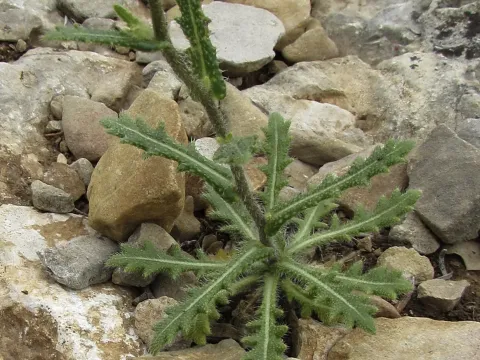
Biscutella valentina
Biscutella valentina
Biscutella valentina is a perennial herbaceous plant belonging to the family Brassicaceae. It is a highly specialized species endemic to the western Mediterranean, primarily thriving in challenging environments characterized by sparse vegetation and thin soil layers.
What the section contains
Biscutella valentina
The plant demonstrates significant physiological adaptation to drought, allowing it to survive in arid conditions where limestone substrates predominate. It requires full sun exposure and excellent soil drainage, as it is particularly sensitive to stagnant water around its root crown.
Botanically, the plant is recognized by its basal rosette of leaves and slender flowering stems producing yellow inflorescences. The fruit, a silicle, is distinctive for its two flattened, circular sections that resemble a pair of spectacles, a key identification feature for the genus.
Its natural range is centered in the eastern regions of the Iberian Peninsula. It typically inhabits rocky slopes, quarries, and barren grounds, where it serves as a pioneer species capable of colonizing disturbed or nutrient-poor sites.
While not a traditional industrial crop, Biscutella valentina is appreciated in botanical circles and ornamental horticulture for its ability to grow in rock gardens and arid landscape compositions, representing the resilience of Mediterranean flora.
The survival of the species is primarily threatened by habitat destruction, such as mining activities, road construction, and land-use changes that disrupt the integrity of its native stony landscapes.
Fungal pathogens represent the most significant threat to plant health, particularly root rots and mildew. These diseases often emerge when the environmental conditions become unnaturally humid, deviating from the plant's arid native habitat.
Insect pests include several species that commonly target members of the mustard family. Crucifer beetles are known to feed on the foliage, which can retard plant growth during the early stages of the season.
Effective management requires maintaining appropriate soil moisture levels and ensuring sufficient aeration of the root system to minimize the risk of infection. The use of cultural practices over chemical interventions is strictly advised.
Conservation of existing populations is essential, as the species has limited distribution. Proper site management, which minimizes human impact and preserves the natural drainage patterns, remains the most effective strategy for protecting the plant.