
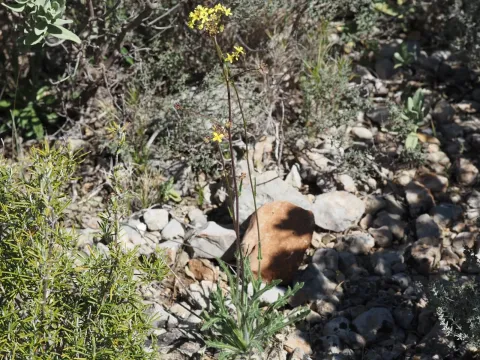
Biscutella coronopifolia
Biscutella coronopifolia
Biscutella coronopifolia is a perennial herbaceous plant belonging to the Brassicaceae family. Native to the Mediterranean basin, it is naturally adapted to rocky, arid habitats and high solar radiation environments.
What the section contains
Biscutella coronopifolia
Botanically, the plant is distinguished by its basal rosette of deeply lobed leaves and distinctive, two-lobed, flat, circular fruits that give the genus its common name, often referred to as "buckler mustard" or "spectacle plant" due to the visual appearance of the seed pods.
The culture thrives in well-drained, lime-rich, or stony soils. It possesses excellent drought tolerance and is highly suited for sites where soil moisture levels are low, making it an ideal candidate for low-maintenance landscaping and xeriscaping.
In terms of agricultural and horticultural management, the species requires minimal fertilization. Over-fertilization, especially with nitrogen, is discouraged as it can weaken the plant's structure and reduce its natural resilience.
Propagation is typically achieved through seeds, which require a loose, well-draining substrate for optimal germination. The species is highly valued for its ability to stabilize thin soils and its high decorative value in specialized garden settings.
Like many members of the Brassicaceae family, this species is susceptible to flea beetles, which can cause significant damage to foliage during the seedling stage if not controlled properly.
Fungal diseases are a primary concern, particularly root rot, which typically occurs in conditions characterized by poor drainage or prolonged exposure to high soil moisture levels.
Aphid infestations can periodically affect flower stalks during the peak growing season, necessitating careful observation to prevent damage to the reproductive organs of the plant.
To mitigate these risks, it is essential to ensure adequate plant spacing to promote airflow and to maintain a dry surface environment to discourage pathogen development.
Crop protection strategies should prioritize environmental management, using chemical interventions only as a secondary measure when population thresholds of pests are exceeded.