
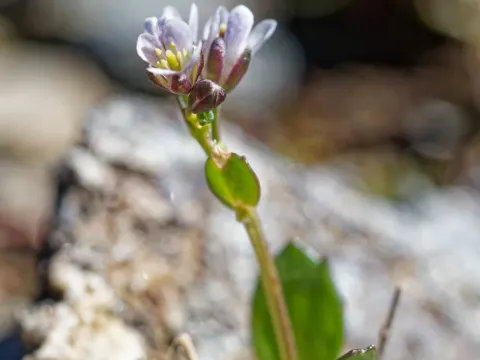
Blue rockcress
Arabis caerulea
Blue rockcress (Arabis caerulea) is a member of the Brassicaceae family, renowned for its compact, cushion-like growth habit in alpine environments.
What the section contains
Blue rockcress
For best results, seeds should be sown in autumn to allow for natural cold stratification during winter months, which significantly improves germination rates.
If sowing indoors, utilize a well-draining seed-starting mix and keep the containers in a cold frame or refrigerator for several weeks before moving them to warmth.
Seeds require light to germinate, so they should be pressed lightly into the surface of the growing medium rather than covered with soil.
Once seedlings have developed a few true leaves, they should be transplanted carefully into individual pots, ensuring minimal root disturbance to prevent shock.
This alpine species requires excellent drainage to thrive; soggy soil will almost certainly result in crown rot and the loss of the plant.
Ideal soil conditions include a sandy, gritty, or rocky substrate with a neutral to slightly alkaline pH, simulating its native mountainous habitat.
The plant prefers full sun to light shade, though in regions with intense summer heat, protection from the midday sun is highly recommended.
Arabis caerulea is perfectly suited for rock gardens, trough gardens, and alpine crevices where it can display its unique foliage and flowers.
Maintaining a clean, mulched surface around the crown using fine grit helps keep the foliage dry and prevents potential decay throughout the year.
Root and crown rot are the primary threats, typically caused by excessive moisture levels and poor soil aeration in the planting site.
Powdery mildew may occur if the plants are placed in areas with poor airflow, particularly during periods of high humidity and heat.
Crucifer pests, such as flea beetles, can attack the plant, necessitating regular inspections during the active growing season in spring.
Slugs and snails may find the succulent-like foliage attractive, especially in wet weather, requiring the use of protective barriers or bait.
To mitigate disease risks, ensure the planting site is well-ventilated and avoid overhead watering that keeps the foliage consistently wet for long durations.