
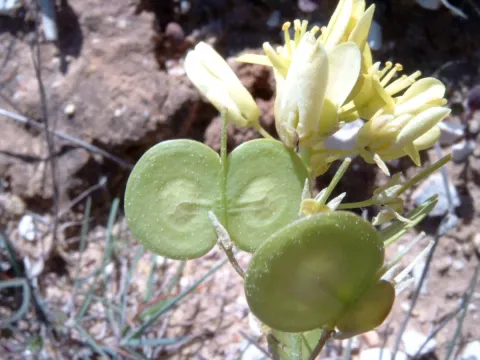
Biscutella scaposa
Biscutella scaposa
Biscutella scaposa is a herbaceous perennial plant belonging to the Brassicaceae family. While not a primary agricultural commodity, its botanical traits make it a subject of interest for ecological studies and potential niche cultivation in arid environments.
What the section contains
Biscutella scaposa
The lifecycle typically begins in the spring, triggered by rising soil temperatures. In its natural habitat, the seeds benefit from cold stratification, which ensures uniform germination once the winter season passes.
The plant is characterized by a basal rosette of leaves from which a scape emerges. As a member of the cruciferous family, it demonstrates a rapid growth rate under favorable moisture conditions, allowing for significant biomass production.
When sowing, it is essential to select well-drained, light-textured soils. Seed depth should be kept shallow, typically no more than 2 centimeters, to allow adequate oxygen penetration for the developing embryo.
The species shows resilience to early spring temperature fluctuations. This hardiness allows for early-season establishment, provided the soil moisture is sufficient to support initial rooting.
Biscutella scaposa thrives in open, sunny locations. It is highly sensitive to shading, which can inhibit the development of the basal rosette and reduce the overall vitality of the plant.
Soil requirements are relatively modest, as the plant is adapted to neutral or slightly alkaline conditions. It performs well in poor, rocky, or sandy substrates, making it suitable for land reclamation projects.
The plant is drought-tolerant, exhibiting survival strategies that allow it to thrive in regions with low annual rainfall. It does not tolerate waterlogged soils, as this often leads to root decay and susceptibility to pathogens.
Proper air circulation is necessary to maintain the health of the foliage. Planting in areas with good wind exposure helps prevent the accumulation of moisture, which is vital for disease control.
Minimal soil cultivation, such as light surface hoeing, is beneficial to improve water infiltration. This practice ensures that nutrients and moisture remain accessible to the shallow root system.
The primary threats to this culture are common pests found in the Brassicaceae family, particularly flea beetles. These insects can cause extensive damage to the foliage during the early seedling stage.
Fungal diseases, including downy mildew, represent a significant risk under conditions of high humidity or poor soil drainage. Maintaining proper field hygiene and spacing is the best preventive strategy.
Aphids can pose a threat during the flowering stage by targeting the scapes. Constant monitoring is recommended to ensure that populations do not reach economic injury levels during the reproductive phase.
Weed management is critical as the plant is sensitive to competition. Fast-growing annual weeds can quickly outcompete Biscutella scaposa for light and water resources during the critical early growth period.
Strict adherence to sanitation protocols, such as cleaning equipment and using certified seed, helps mitigate the introduction and spread of soil-borne pathogens or pests within the field.