
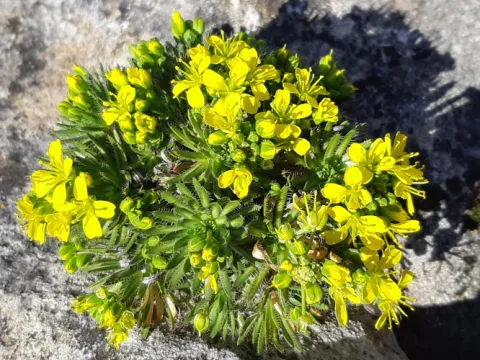
Biscutella flexuosa
Biscutella flexuosa
Biscutella flexuosa is a perennial herb belonging to the Brassicaceae family. It is recognized for its adaptation to specific ecological niches and interesting morphological structure.
What the section contains
Biscutella flexuosa
Sowing should be conducted in early spring when soil temperatures reach stable levels. The seeds are relatively small and require precise depth control to ensure uniform emergence.
The recommended sowing density depends on the final purpose of the crop. A spacing of 30–40 cm between rows is generally sufficient to allow for healthy development of the basal rosette.
Proper seedbed preparation is essential. The soil must be loose and free of large clods to support the fine root system during the initial growth phase of the plant.
The crop establishes well if competition from weeds is minimized during the first month after germination, as the plant shows a relatively slow initial growth rate.
This species thrives in open, sunny locations. Sunlight is a critical factor for the development of the flowering stem and the overall photosynthetic activity of the plant.
Biscutella flexuosa prefers well-drained, neutral, or slightly alkaline soils. It is highly intolerant of waterlogged conditions, which can lead to rapid decay of the root collar.
The plant demonstrates significant drought tolerance once established. Its morphological adaptations allow it to conserve moisture effectively even under low precipitation conditions.
Nutrient requirements are moderate. Over-fertilization, especially with high nitrogen levels, can lead to excessive vegetative growth at the expense of structural integrity.
Temperature management involves ensuring the plant is not subjected to extreme humidity in high heat, which can exacerbate susceptibility to various fungal pathogens.
Cruciferous pests, including flea beetles, represent the primary threat to the crop. These insects can cause significant damage to seedlings by feeding on the leaves.
Fungal diseases like downy mildew and powdery mildew are prevalent in poorly ventilated fields with high moisture. Maintaining proper spacing is a key preventative measure.
Aphids can pose a threat by colonizing the inflorescences and stems. Early intervention with biological control agents or targeted spraying is advised for heavy infestations.
Root rot remains a concern in poorly drained soils. Crop rotation practices should be strictly followed to prevent the accumulation of soil-borne pathogens in the field.
Effective management includes regular inspection for signs of stress or pest colonization, particularly during periods of rapid growth and high environmental humidity.