
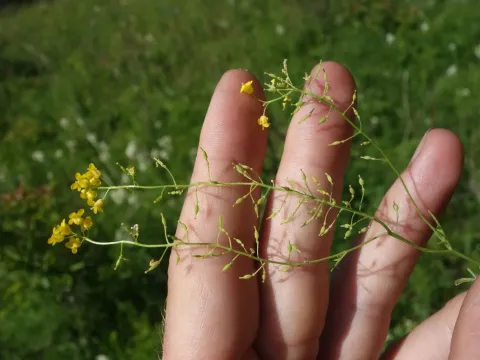
Bog yellowcress
Rorippa brachycarpa
Bog yellowcress (Rorippa brachycarpa) is a member of the Brassicaceae family that thrives in diverse agricultural environments.
What the section contains
Bog yellowcress
The sowing process begins in early spring, utilizing well-prepared, moisture-retentive soils to ensure uniform germination of the small seeds.
Seeds should be sown at a shallow depth, typically 1 to 2 centimeters, followed by light compaction of the soil surface to maintain capillary water movement.
Row planting with spacing of 15–20 centimeters is recommended to facilitate efficient weeding and prevent competition between young seedlings.
Due to its rapid development cycle, multiple successional sowings can be implemented to ensure a continuous supply throughout the growing season.
This crop requires consistent moisture levels, making it ideal for cultivation in moist or damp areas where other vegetables might struggle.
Fertile, loamy soils rich in organic matter provide the best nutritional foundation for optimal biomass production in Rorippa brachycarpa.
The plants exhibit the best growth under cool to moderate temperatures, which helps to maintain the delicate texture and flavor of the foliage.
Adequate sunlight is essential for photosynthesis; however, the plant can tolerate light shade without significantly compromising its yield.
Soil aeration via periodic shallow cultivation is necessary to support root health, particularly in heavier soil types prone to compaction.
Flea beetles represent the most significant pest threat to this crop, particularly during the seedling stage when plants are most vulnerable.
Fungal diseases, including downy mildew and various root rots, may occur if soil moisture remains excessively high or if there is poor drainage.
Cultural practices, such as wide spacing and proper crop rotation, are crucial strategies for mitigating the risk of pathogen outbreaks.
Monitoring for lepidopteran larvae is also recommended, especially in regions with high pest pressure during the warmer months.
Maintaining high plant vigor through balanced fertilization and proper hydration serves as a primary defense mechanism against biotic stressors.
Harvesting should occur when the plants reach the rosette stage but before the initiation of bolting, which negatively affects quality.
Cutting the foliage in the early morning ensures the leaves have peak turgor pressure, enhancing both shelf life and market appearance.
Sharp tools are necessary to avoid bruising the tender leaves during the harvest process, which can lead to rapid post-harvest deterioration.
Immediate cooling of the harvested crop is vital; storing in refrigerated conditions helps to maintain freshness for extended periods.
Proper post-harvest handling, including sorting and cleaning, ensures that only high-quality produce reaches the end consumer.