
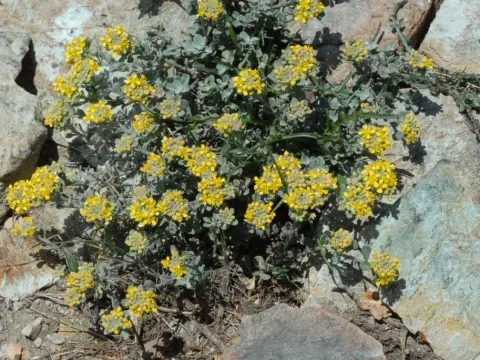
Biscutella rotgesii
Biscutella rotgesii
Biscutella rotgesii is a perennial herbaceous plant belonging to the Brassicaceae family. It is a highly localized endemic species found exclusively in specific regions of France, primarily in the Var department.
What the section contains
Biscutella rotgesii
The plant is adapted to specialized ecological niches, thriving on rocky outcrops and limestone slopes. These environments are characterized by poor, well-drained soils and high exposure to solar radiation, where it faces minimal competition from faster-growing species.
In terms of botany, the species exhibits a typical cruciferous structure with basal rosettes and slender flowering stems. The fruits are distinctive, consisting of two flattened, disc-like valves that aid in wind dispersal, which is characteristic of the genus Biscutella.
Cultivation of this plant is not practiced in agriculture, as its growth rate and site requirements make it unsuitable for commercial use. Its primary value lies in its ecological role and its status as a vital component of local Mediterranean biodiversity.
Environmental requirements include a consistent microclimate and stable geological conditions. Any deviation from these natural parameters can lead to a rapid decline in the plant's population density, highlighting its status as an endangered species.
The primary threats to Biscutella rotgesii are habitat destruction and environmental fragmentation resulting from human development and land-use changes in its native range.
Invasive plant species represent a major challenge, as they outcompete the localized endemic for resources such as space, nutrients, and sunlight in the already fragile ecosystem.
Climate change poses a long-term risk, particularly regarding the alteration of seasonal precipitation patterns which are critical for the survival of the species during its growth stages.
While traditional agricultural pests are not a major concern, the species is vulnerable to pathogenic fungi and localized herbivory that can destroy the few reproductive organs produced by the plant.
Conservation efforts are essential to protect the remaining populations. These efforts focus on maintaining the physical integrity of the habitat and monitoring the reproductive success of the plants in their wild state.