
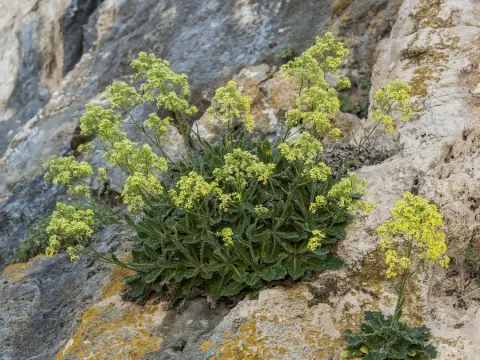
Biscutella frutescens
Biscutella frutescens
Biscutella frutescens is a perennial shrub-like herb belonging to the Brassicaceae family. It is distinct for its semi-woody stems and is native to the rocky landscapes of Spain, where it thrives in harsh, nutrient-poor conditions.
What the section contains
Biscutella frutescens
The plant has highly specific environmental requirements. It is best suited for arid climates with high levels of solar radiation. It is not adapted to cold, damp northern winters and performs best when planted in sites that mimic its natural stony, sun-drenched habitat.
Regarding soil, Biscutella frutescens requires exceptionally well-draining substrates. Loamy or sandy soils with high gravel content are ideal. It is a calciphilous plant, meaning it grows best in soils with high alkalinity and calcium carbonate content.
Agricultural management is minimal due to the plant's natural adaptation to wilderness environments. Irrigation should be restricted strictly to prolonged drought periods, as the plant is highly susceptible to root decay if kept constantly moist.
The growth cycle is characterized by slow development in the first year, focusing on root establishment. Once mature, the plant displays a robust form that is resilient against wind and heat stress, requiring almost no supplemental fertilization.
The primary biological threats include crucifer-specialized pests such as flea beetles, which can skeletonize the foliage, and aphids that may congregate on developing floral buds during the early spring period.
Pathogenic threats are dominated by soil-borne fungal pathogens like Phytophthora and Pythium species, which proliferate in poorly drained soils. Providing sufficient air circulation and maintaining dry substrate conditions is the best preventative strategy.