
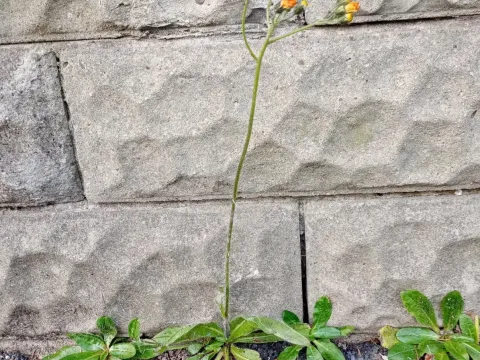
Hawkweed
Pilosella
Hawkweed (Pilosella) is a perennial herbaceous plant belonging to the Asteraceae family. In agricultural practices, it is valued for its hardiness and its ability to thrive in challenging soil conditions where other crops fail.
What the section contains
 Alpine hawkweed
Pilosella alpicola
Alpine hawkweed
Pilosella alpicola
 Blytt's hawkweed
Pilosella blyttiana
Blytt's hawkweed
Pilosella blyttiana
 Castilian hawkweed
Pilosella castellana
Castilian hawkweed
Pilosella castellana
 Glacier hawkweed
Pilosella glacialis
Glacier hawkweed
Pilosella glacialis
 Hoppe's hawkweed
Pilosella hoppeana
Hoppe's hawkweed
Pilosella hoppeana
 Kralik's hawkweed
Pilosella kralikii
Mouse-ear hawkweed
Pilosella auriculoides
Kralik's hawkweed
Pilosella kralikii
Mouse-ear hawkweed
Pilosella auriculoides
 Pilosella glomerata
Pilosella glomerata
Pilosella glomerata
 Pilosella pintodasilvae
Pilosella pintodasilvae
Pilosella pintodasilvae
 Roth's Hawkweed
Pilosella rothiana
Roth's Hawkweed
Pilosella rothiana
 Saussurea-like hawkweed
Pilosella saussureoides
Saussurea-like hawkweed
Pilosella saussureoides
 Scandinavian hawkweed
Pilosella scandinavica
Scandinavian hawkweed
Pilosella scandinavica
 Schultes' hawkweed
Pilosella schultesii
Vansoest's Hawkweed
Pilosella vansoestii
Schultes' hawkweed
Pilosella schultesii
Vansoest's Hawkweed
Pilosella vansoestii
 Zizian hawkweed
Pilosella ziziana
Zizian hawkweed
Pilosella ziziana
Hawkweed
The plant prefers sunny locations with light, sandy, or stony soil textures. It has low nutrient requirements, making it suitable for cultivating on infertile land and reclaimed sites that require soil stabilization.
Climate requirements for hawkweed include significant frost tolerance and excellent drought resistance. It is well-adapted to the temperate climate zone, maintaining productivity across a wide range of moisture levels.
Management practices emphasize minimal soil disturbance and good drainage. As a low-maintenance crop, it does not require frequent fertilization or intensive irrigation, which lowers the production costs.
The economic value of this crop is primarily found in the pharmaceutical industry due to its active biochemical compounds, and in ecological restoration projects for erosion control on slopes.
The primary diseases affecting hawkweed include powdery mildew and rust, which often emerge under high humidity levels or poor air circulation within the plant canopy.
Pests such as aphids and spider mites may pose a threat during dry spells, necessitating regular monitoring to prevent significant damage to the leaf biomass and health of the stands.