


Reference · Crops
Hawksbeard
Crepis
Hawksbeard (genus Crepis) is a diverse group of herbaceous plants within the Asteraceae family, encompassing both annual and perennial species. Native primarily to the Northern Hemisphere, these plants have successfully colonized a wide range of habitats, from grasslands and meadows to disturbed sites, roadsides, and agricultural fields.
4
items
What the section contains
Marketplace
Products in this section · 1
Hawksbeard
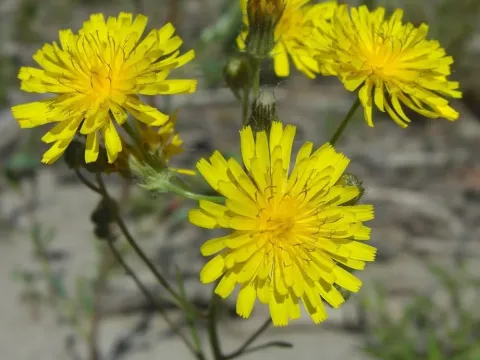
The botanical structure of Crepis typically features a basal rosette of leaves and an erect, often branched flowering stem. The flower heads are composed of yellow ray florets, which are highly attractive to pollinators. Following pollination, the plant produces achenes equipped with a pappus, facilitating wind dispersal over significant distances.
Crepis species generally thrive in well-lit environments and are adaptable to various soil types, though they prefer nutrient-rich, moist substrates. Their ability to tolerate environmental stress and competitive exclusion makes them resilient plants that can rapidly establish themselves in fallow lands or poorly managed pastures.
In agricultural systems, hawksbeard is typically classified as a weed. It competes with crops for essential resources such as water, nutrients, and sunlight. Effective management strategies include early mechanical cultivation, proper crop rotation, and the judicious use of herbicides to prevent the seed bank from increasing within the field.
While not a primary cultivated crop, hawksbeard can contribute to the botanical composition of wild meadows and natural grazing areas. However, its value is often diminished by its competitive nature as a weed, leading agronomists to focus primarily on its suppression rather than its utilization as a forage source.
Common diseases affecting Crepis include fungal infections like powdery mildew, which can significantly inhibit photosynthesis and plant growth during damp seasons. Managing these diseases is rarely a priority for farmers unless the weed acts as a host for pathogens that cross-infect valuable commercial crops.
Pests such as seed-feeding beetles and gall flies frequently target the reproductive organs of hawksbeard. While these insects can reduce seed production, they rarely provide enough control to prevent the plant's spread in a field setting. Integrated pest management, therefore, relies on mechanical and chemical interventions rather than relying solely on natural enemies.