
Saussurea-like hawkweed
Pilosella saussureoides
Description
Growing requirements
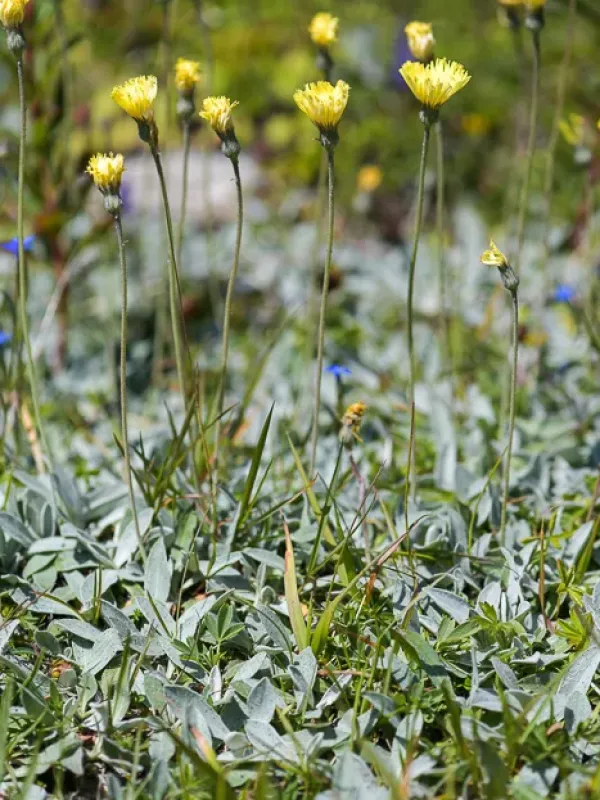
Saussurea-like hawkweed (Pilosella saussureoides) is a perennial herbaceous plant belonging to the Asteraceae family. It is recognized for its hardiness and ability to thrive in harsh environments, making it a subject of interest in ecological restoration and forage management.
The native range of the species is primarily located in the alpine and forest-steppe zones of Siberia and East Asia. The plant is well-adapted to extreme thermal fluctuations and demonstrates significant frost resistance during the dormant winter period.
In terms of soil requirements, this species favors well-drained, nutrient-poor substrates, including gravelly or rocky soils. It is particularly efficient at colonizing disturbed slopes where more demanding forage crops fail to establish.
Botanically, the plant is characterized by a dense basal rosette and specialized trichomes that minimize transpiration. These structural adaptations are essential for surviving periods of low precipitation during the peak growing season.
Agricultural use of Pilosella saussureoides is largely centered on its role in permanent pasture mixtures. Its capacity to form stable turf helps reduce soil erosion while providing a resilient source of nutrition for livestock in mountainous regions.
Main diseases and pests
The primary diseases affecting this crop are fungal infections, such as powdery mildew, which thrive under conditions of high humidity. These pathogens can compromise leaf health, affecting the overall nutritional quality of the forage.
Insects, particularly those that target the flowering stages, pose the main pest threat. Larvae that infest the capitula can drastically reduce seed viability, hindering the natural regeneration of the plant population within the field.
Overgrazing represents a significant threat to the survival of the species. When the soil becomes compacted due to high livestock density, the delicate root system of the hawkweed faces severe physiological stress, leading to a decline in plant vigor.
Managing the health of the stand involves strategic rotation of pastures. This practice effectively prevents the buildup of pest populations and allows the vegetation to recover, ensuring the long-term sustainability of the stand.
Maintaining a balanced nutrient profile in the soil is crucial for plant resilience. Adequate phosphorus and potassium levels contribute to a stronger immune system, helping the plants resist common field pathogens and environmental stressors.