
Alpine hawkweed
Pilosella alpicola
Description
Growing requirements
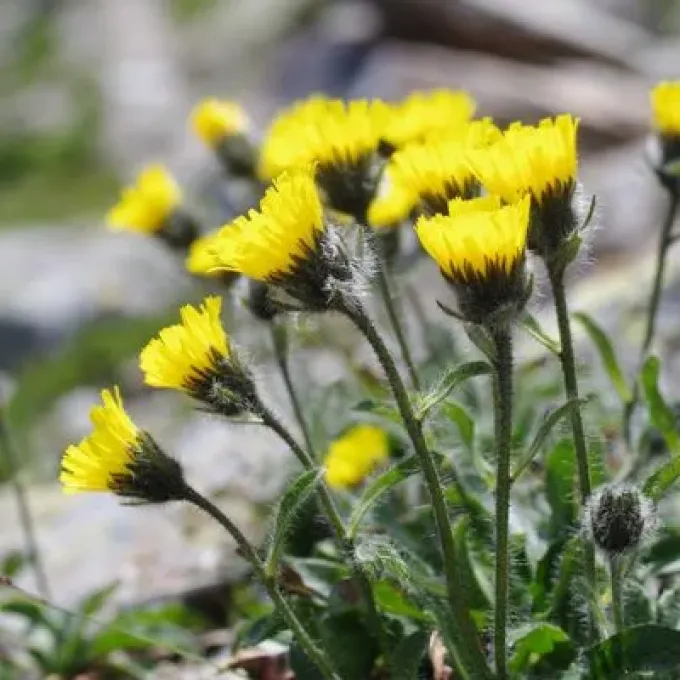
Alpine hawkweed (Pilosella alpicola) is a perennial herbaceous plant member of the Asteraceae family, native to high-altitude mountain ranges.
The plant is characterized by its rosette growth form and dense glandular hairs, which act as an adaptation to prevent water loss in alpine climates.
For successful cultivation, the species requires well-drained, gritty, or rocky soils that prevent root saturation during dormant seasons.
Climatic requirements are specific to high-light environments, making sunny slopes or rock gardens the ideal location for its development.
Nutrient requirements are relatively low, as the plant has evolved to thrive in soils where other agricultural crops struggle to survive.
Main diseases and pests
Powdery mildew represents the primary threat during seasons with high atmospheric humidity and poor ventilation among the plants.
Root rot occurs if the drainage system is insufficient, leading to rapid decay of the taproot system during the early spring thaw.
Aphids are the most common pests found on the flower stalks, often requiring integrated pest management strategies to protect the crop.
Weed competition is a significant concern, as the slow-growing alpine species cannot compete with aggressive grasses for ground space.
Proper field maintenance includes regular inspections to identify signs of chlorosis or leaf spotting caused by opportunistic fungal pathogens.