
Castilian hawkweed
Pilosella castellana
Description
Growing requirements
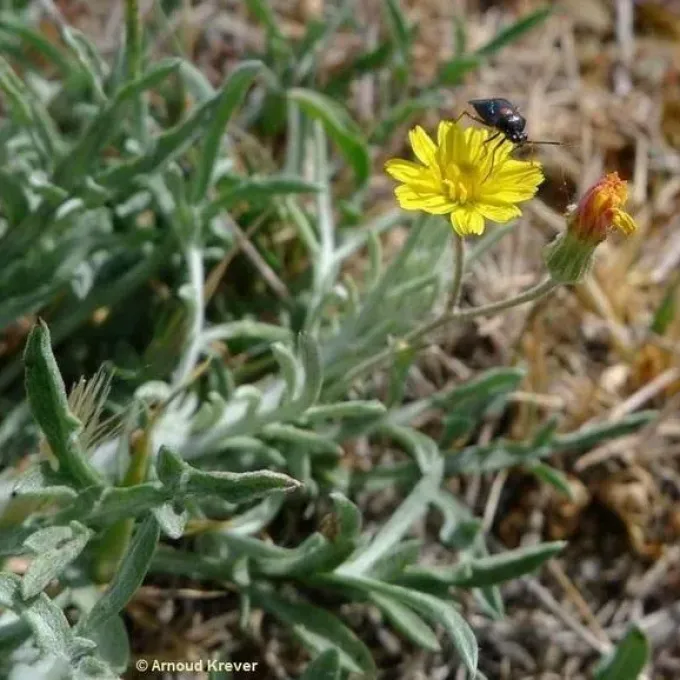
Castilian hawkweed (Pilosella castellana) is a perennial herbaceous plant belonging to the Asteraceae family. It is recognized by its characteristic rosette of leaves and the production of stolons, which allow the plant to spread effectively across suitable habitats.
The plant originates from the Mediterranean and Western European regions. It has adapted to survive in diverse conditions, ranging from rocky mountainous outcrops to open grasslands, displaying significant hardiness against environmental stress.
Botanically, the species is known for its trichomes (fine hairs) on its leaves, which serve to reduce transpiration. This morphological adaptation is critical for its resilience in arid environments where water availability is frequently limited.
In terms of soil requirements, Pilosella castellana thrives in well-drained, nutrient-poor, and sandy or gravelly substrates. It performs poorly in dense, clay-heavy soils, which are prone to waterlogging and restrict root development.
Cultural management should focus on site preparation to ensure proper drainage and full sun exposure. While the plant is low-maintenance, keeping the area free of aggressive weeds during the establishment phase is essential for its long-term survival and spread.