
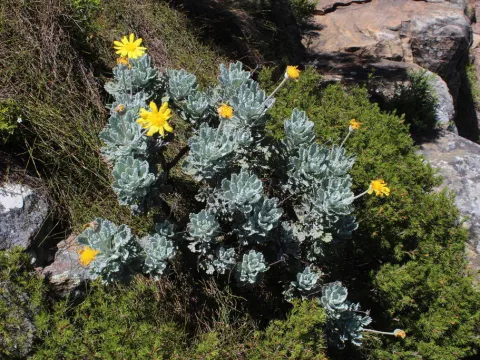
Euryops
Euryops
Euryops is a genus of flowering shrubs and subshrubs belonging to the Asteraceae family. These plants are widely recognized for their radiant yellow, daisy-like flowers that bloom extensively, making them popular in both landscaping and container gardening.
What the section contains
 Euryops abrotanifolius
Euryops abrotanifolius
Euryops abrotanifolius
 Euryops acraeus
Euryops acraeus
Euryops acraeus
 Euryops annae
Euryops annae
Euryops annae
 Euryops anthemoides
Euryops anthemoides
Euryops anthemoides
 Euryops brachypodus
Euryops brachypodus
Euryops brachypodus
 Euryops brevipapposus
Euryops brevipapposus
Euryops brevipapposus
 Euryops empetrifolius
Euryops empetrifolius
Euryops empetrifolius
 Euryops floribundus
Euryops floribundus
Euryops floribundus
 Euryops lateriflorus
Euryops lateriflorus
Euryops lateriflorus
 Euryops linearis
Euryops linearis
Euryops linearis
 Euryops multifidus
Euryops multifidus
Euryops multifidus
 Euryops oligiglossus
Euryops oligiglossus
Euryops oligiglossus
 Euryops tenuissimus
Euryops tenuissimus
Euryops tenuissimus
Euryops
Native to Southern Africa, Euryops is biologically adapted to sun-drenched environments and rocky terrain. The foliage is typically finely divided and sometimes covered in fine hairs, which serves as a natural mechanism to reduce water loss in their native habitat.
Regarding cultivation, Euryops requires full sun exposure to flourish. It thrives in well-draining soils with a neutral pH. Proper soil structure is critical, as heavy, waterlogged soil inhibits root respiration and often leads to catastrophic decay of the root system.
Climatic requirements are specific to Mediterranean or subtropical environments. While they can tolerate light frosts, they are generally not winter-hardy in colder zones and must be protected or moved indoors once temperatures drop significantly during autumn months.
The agrotechnical management involves regular pruning after the flowering phase to maintain the plant's shape and encourage dense growth for the following season. Balanced fertilization is recommended during the growth cycle to support the high energy demands of constant flower production.
The plant is susceptible to common pests such as aphids and spider mites, particularly in greenhouses or sheltered environments with low humidity. Integrated pest management, including horticultural soaps or systemic sprays, is effective in managing these infestations.
Root rot and powdery mildew are the most prevalent diseases. These are primarily caused by improper watering techniques or high ambient humidity without adequate airflow. Improving drainage and ensuring spacing between plants are the best preventative measures.