
Euryops acraeus
Euryops acraeus
Description
Growing requirements
Euryops acraeus is a perennial evergreen shrub belonging to the Asteraceae family. Originating from the high-altitude regions of the Drakensberg mountains in South Africa, this plant is well-adapted to alpine climates.
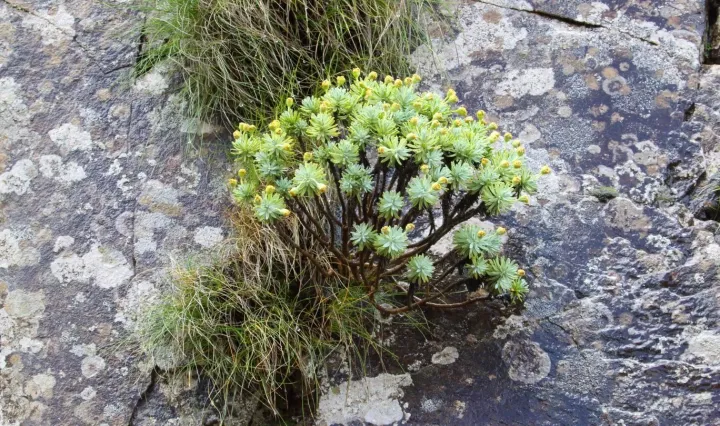
The plant features a compact, mound-forming habit with a height usually not exceeding 50 cm. Its primary aesthetic value lies in its striking silvery-blue, needle-like foliage, which maintains its appearance throughout the seasons.
Flowering occurs during the spring season, during which the plant produces a profusion of bright yellow, daisy-like flowers. The contrast between the golden blooms and the cool-toned silver leaves makes it a highly desirable garden ornamental.
This species demands full sun exposure and requires exceptionally well-draining soil, ideally of a gritty or rocky composition. It is essential to avoid heavy, water-retentive clay soils, which can suffocate the roots and lead to decline.
In terms of climate, Euryops acraeus is considered hardy, capable of surviving light frosts. It is an excellent choice for rock gardens, xeriscapes, and areas where water conservation is necessary, as it establishes deep roots to manage moisture.
Main diseases and pests
The most significant threat to the health of Euryops acraeus is root rot, typically caused by waterlogged soil conditions. Ensuring that the planting site has excellent drainage is the most effective preventative measure against fungal infection.
Pests such as aphids and spider mites can occasionally affect the plant, particularly in sheltered or poorly ventilated environments. Regular monitoring of the foliage and shoots can help detect early signs of infestation.
Powdery mildew may occur if the plant is grown in areas with high humidity and insufficient air circulation. Proper spacing between plants and a sunny, open location significantly reduce the likelihood of this fungal disease.
Nutrient deficiency or improper soil pH can cause foliage chlorosis, resulting in yellowing leaves and reduced vigor. Periodic soil testing and the application of balanced, slow-release fertilizers can mitigate these issues.
Proper hygiene, such as removing dead or damaged branches after the flowering season, helps maintain the plant's structural integrity and lowers the risk of pests hiding in dense foliage. Good cultural practices are the foundation of pest management.