
Euryops empetrifolius
Euryops empetrifolius
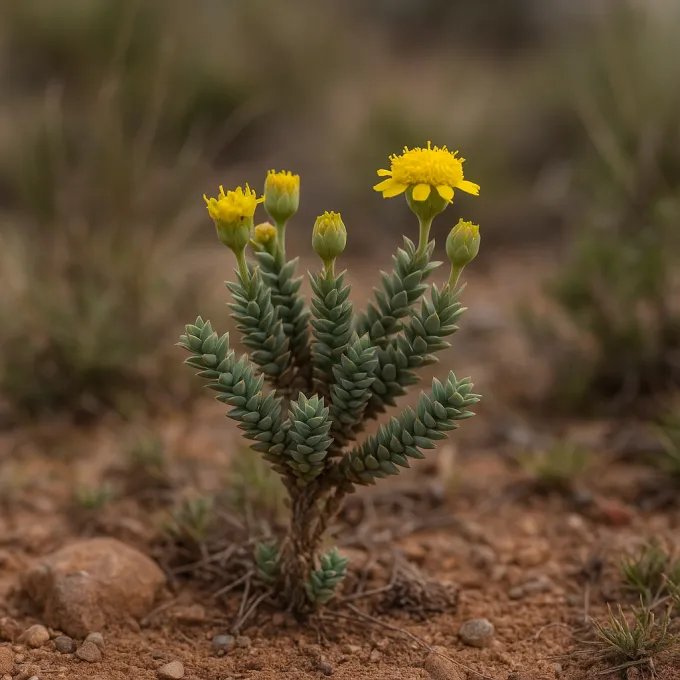
Description
Growing requirements
Euryops empetrifolius is a distinctive species within the Asteraceae family. Native to the rugged landscapes of South Africa, this evergreen shrub is known for its resilience and unique aesthetic appeal.
This species thrives in well-draining, sandy or rocky soils that mimic its natural habitat. It requires full sun exposure to maintain its compact growth habit and to produce its characteristic yellow daisy-like flowers.
Climatically, it is suited for Mediterranean-style environments where frost is absent or very mild. In colder regions, growers typically treat it as a container plant that can be moved indoors during winter months.
The cultural requirements include a period of establishment with consistent watering, followed by high drought tolerance once the root system is mature. Overwatering is the most common cause of failure in cultivating this shrub.
Proper aeration is essential for the health of the plant. Whether planted in the ground or in pots, ensuring that the roots are not suffocated by saturated soil is the key to longevity.
Main diseases and pests
Spider mites are the most frequent pest challenge, particularly during hot and dry summer conditions. They colonize the undersides of leaves, often leading to discoloration and premature leaf drop.
Mealybugs can also infest the plant, hiding in the leaf axils. Regular monitoring and physical removal, or the use of horticultural oils, are effective control methods for this pest.
Aphids tend to target tender new growth during the spring flush. While they are usually a minor nuisance, heavy infestations can weaken the shrub and attract sooty mold.
Root rot, driven by Phytophthora or Pythium species, occurs when soil drainage is poor. To mitigate this risk, never allow the plant to sit in standing water after irrigation.
Powdery mildew may occur if the plant is grown in humid environments with poor air circulation. Providing adequate space and choosing a location with natural airflow will significantly reduce the likelihood of fungal infections.