
Euryops abrotanifolius
Euryops abrotanifolius
Description
Growing requirements
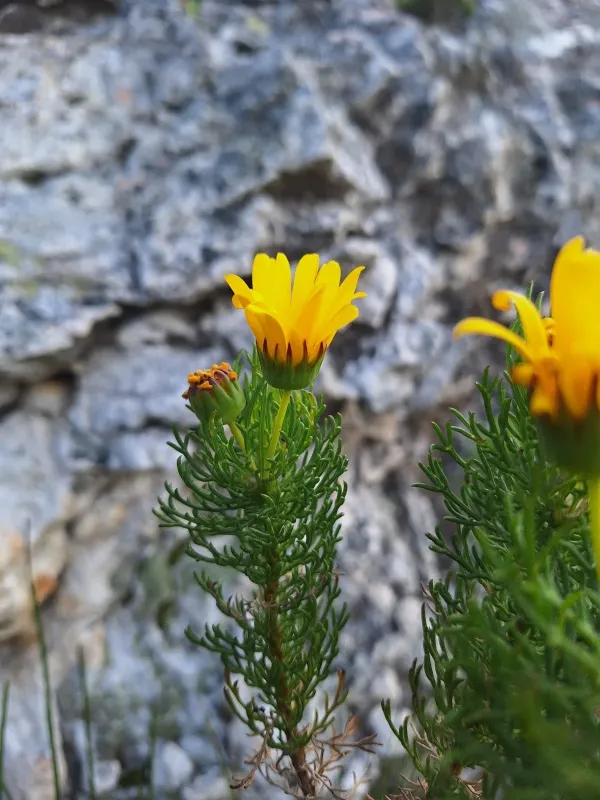
Euryops abrotanifolius is an ornamental evergreen shrub belonging to the Asteraceae family. It is characterized by its finely divided, feathery foliage that closely resembles southernwood, which contributes to its distinct aesthetic appeal in landscape design.
Native to the arid regions of South Africa, this plant is well-adapted to environments with high sunlight and well-drained, sandy soils. In agricultural or horticultural settings, it thrives best when placed in full sun, ensuring vigorous growth and prolific flowering.
The soil requirements for this species are specific: it demands excellent drainage to prevent root issues. It typically performs well in poor, gritty soils and does not require high levels of fertilization, as excessive nutrients can result in succulent but weak branch growth.
Climatic requirements involve a frost-free environment or a temperate climate. While it can withstand light, short-term frost, it is primarily grown as a container plant in colder zones, allowing for protection during extreme weather conditions or indoor overwintering.
General maintenance includes periodic pruning to maintain a compact habit and improve structural integrity. By trimming back the stems after the main flowering flush, gardeners can encourage denser growth and a more symmetrical plant profile for the next season.
Main diseases and pests
Common pests associated with this shrub include aphids and spider mites, which frequently target the soft growth tips. Regular inspection and prompt treatment with horticultural oils or approved insecticidal soaps are essential to manage these populations effectively.
Fungal pathogens often appear if the plant is subjected to poor air circulation or over-watering. Diseases such as crown rot can be lethal to the plant; therefore, ensuring a rapid drying cycle between waterings is the primary cultural control method against soil-borne pathogens.