
Euryops linearis
Euryops linearis
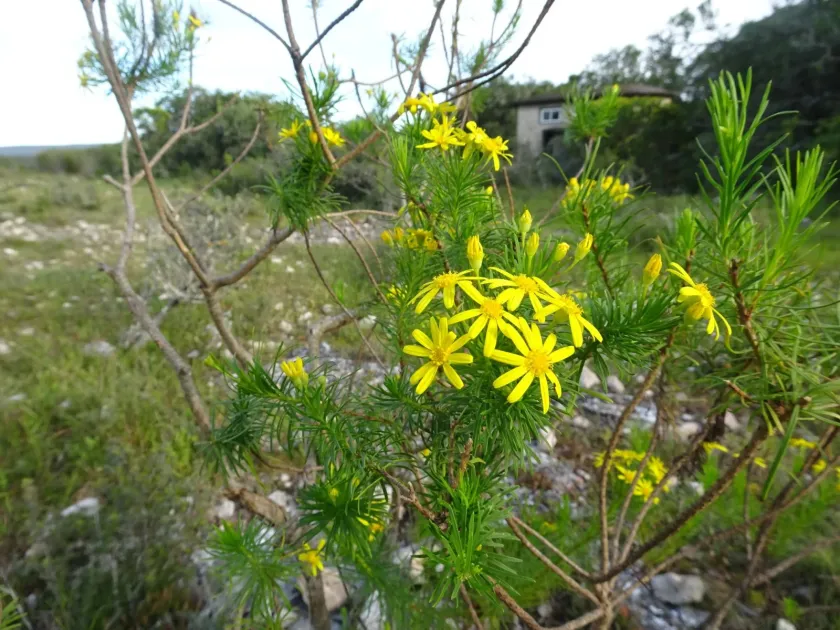
Description
Growing requirements
Euryops linearis is an evergreen subshrub belonging to the Asteraceae family. Known for its slender, linear foliage and vibrant yellow, daisy-like flowers, this plant serves as a significant ornamental species in landscaping, especially in warm climates that mirror its native South African habitat.
The botanical structure of the plant consists of woody-based stems that support finely divided, needle-like leaves. Its natural growth habit is somewhat rounded, making it a popular choice for borders and xeriscaping projects where drought tolerance is a prioritized trait.
Optimal growth for Euryops linearis is heavily dependent on full sun exposure. It requires at least six to eight hours of direct sunlight daily to maintain a compact shape and ensure prolific blooming. Lack of light results in sparse foliage and leggy stems, significantly reducing its aesthetic value.
Regarding soil requirements, the species demands excellent drainage to prevent root rot. It thrives in gritty, sandy soils and is remarkably tolerant of low-fertility conditions. Heavy clay soils are generally unsuitable unless amended extensively with organic matter and drainage materials.
The plant demonstrates moderate frost tolerance but is not considered fully hardy in freezing environments. In colder regions, it is frequently cultivated in containers, allowing for transport to greenhouses or protected porches during the winter months to avoid damage from frost and excessive moisture.
Main diseases and pests
Common pests affecting Euryops linearis include spider mites, which typically thrive in warm, dry environments and cause discoloration of the foliage. Regular monitoring and the application of horticultural oils or appropriate miticides are essential for controlling these infestations.
Fungal pathogens pose a significant threat primarily when soil moisture management is neglected. Root rot, induced by poor drainage, remains the most frequent cause of plant decline. Utilizing high-quality, porous soil mixtures and allowing the top layer to dry between waterings are the best preventive measures.