
Euryops brachypodus
Euryops brachypodus
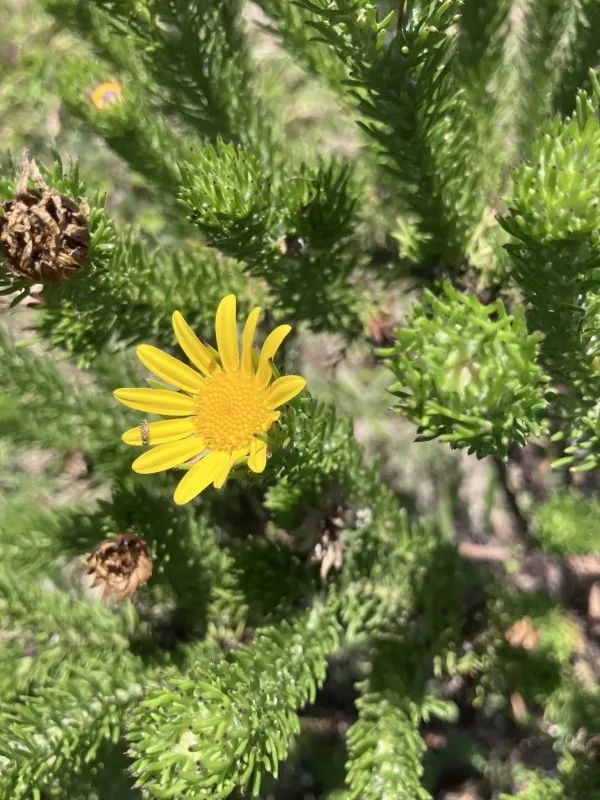
Description
Growing requirements
Euryops brachypodus is a shrub species belonging to the Asteraceae family, recognized for its compact habit and vibrant, daisy-like flowers.
Native to specific regions of South Africa, this plant is well-adapted to habitats with significant sun exposure and rocky or well-drained soils.
Successful cultivation requires a site with excellent drainage to prevent root rot, as the plant does not tolerate waterlogged soil conditions.
The climate should preferably be temperate or Mediterranean, as the plant is sensitive to prolonged heavy frost, which can damage its vegetative tissues.
Regular pruning is highly recommended to maintain its shape and promote vigorous growth, which ensures a dense structure and prolific seasonal blooms.
Main diseases and pests
The primary horticultural challenge for Euryops brachypodus is the development of fungal infections, which are often caused by poor air circulation or overwatering.
Common insect pests include aphids and spider mites, which can cause significant stress to the plant during the peak summer heat or dry periods.
To maintain plant health, it is essential to monitor for signs of chlorosis or leaf curling, which may indicate nutrient deficiencies or pest infestation.
Integrated pest management, including regular inspection and the use of targeted biological or chemical treatments, is effective in managing potential threats.
Providing optimal environmental conditions—namely full sunlight and well-draining substrate—remains the most effective way to prevent most biological threats.