
Euryops floribundus
Euryops floribundus
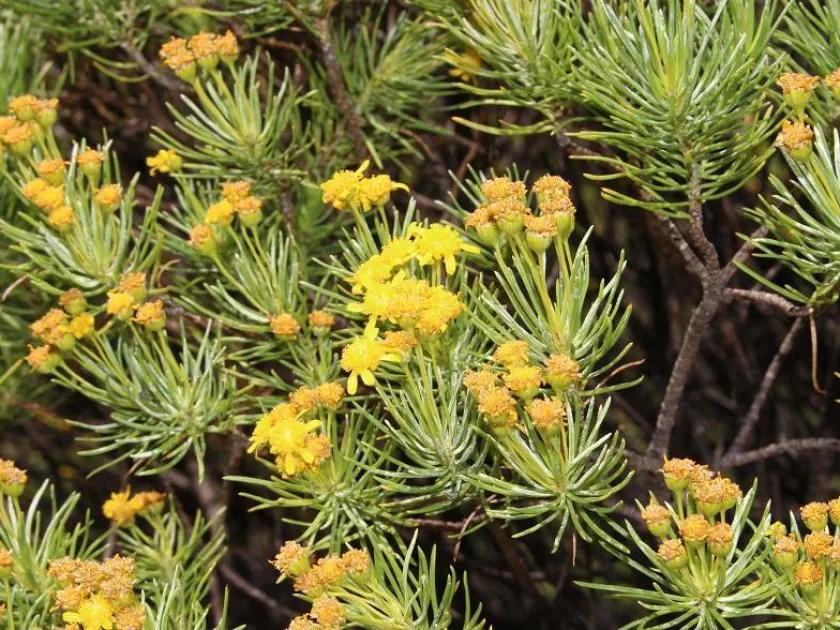
Description
Growing requirements
Euryops floribundus is a perennial evergreen shrub belonging to the Asteraceae family. Known for its abundant, daisy-like yellow flowers, this plant creates a vibrant visual impact in gardens and landscapes, maintaining a bushy habit throughout the growing season.
Originating from the southern regions of Africa, this plant is naturally adapted to sunny, warm climates. It thrives in well-drained, sandy, or rocky soils, reflecting its native environmental conditions where seasonal water scarcity is common and excessive humidity is rare.
For successful cultivation, Euryops requires a location with full sun exposure, which is critical for maximizing flower production. Soil management is equally important; it must be porous enough to allow water to drain quickly, as the root system is highly susceptible to rot in waterlogged conditions.
Agronomic maintenance includes regular pruning after the flowering season to maintain the plant's shape and encourage dense branching. Fertilization should be light and balanced during the growing phase to avoid excessive foliage growth at the expense of floral development.
Host-plant utility is centered on landscaping, particularly in xeriscaping or Mediterranean-style gardens. Due to its ornamental nature, it is frequently used as a specimen plant, in mixed borders, or in container gardening for patios where climate control is easier to manage.
Main diseases and pests
The primary pests affecting Euryops are spider mites and mealybugs, which thrive in hot and dry environmental conditions. Infestations can be managed through the application of horticultural oils or systemic insecticides, combined with consistent monitoring to prevent spread.
Root rot caused by fungal pathogens is the most common disease, resulting from overwatering or inadequate soil drainage. To maintain plant health, it is essential to allow the soil to dry out between watering sessions and ensure that containers or planting beds have excellent water runoff capabilities.