
Euryops tenuissimus
Euryops tenuissimus
Description
Growing requirements
Euryops tenuissimus is a striking evergreen subshrub belonging to the Asteraceae family. Originating from the arid landscapes of South Africa, it has evolved to thrive in environments with significant drought stress and high levels of solar radiation.
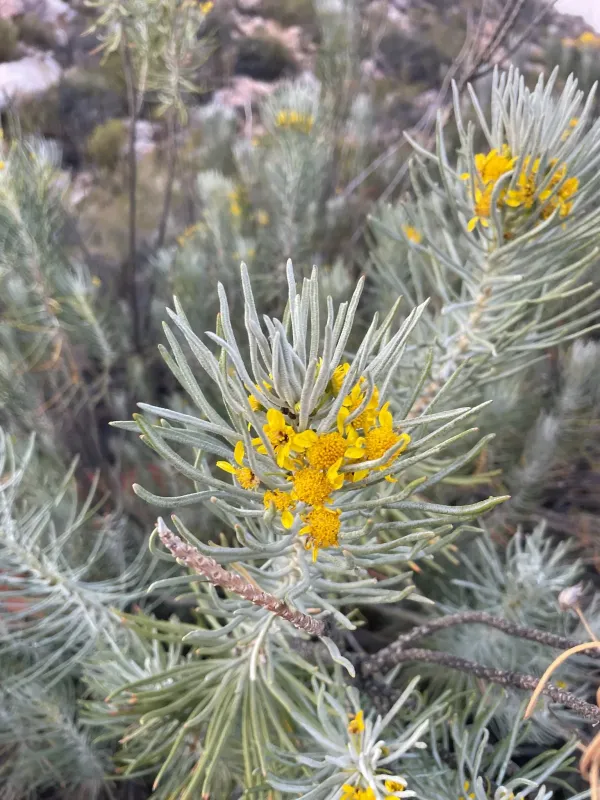
The plant is characterized by its fine, needle-like foliage and woody, highly branched stems. During the flowering season, it produces a profusion of bright yellow, daisy-like flower heads that create a vivid contrast against the dark green, intricate texture of the leaves.
Cultural requirements emphasize the need for full sun exposure. In agricultural or horticultural settings, plants should be placed in locations that receive at least six to eight hours of direct sunlight daily to ensure optimal growth and flower bud development.
Soil composition must be light, well-draining, and gritty. Euryops tenuissimus is particularly sensitive to waterlogged conditions, which lead to root asphyxiation and subsequent fungal pathogen colonization. A sandy loam soil mix with incorporated perlite or volcanic gravel is recommended.
Water management is the most critical aspect of maintenance. While established plants are somewhat drought-tolerant, consistent watering during the growing season is necessary. However, the soil must be allowed to dry out significantly between irrigation intervals to prevent root damage.
Main diseases and pests
The primary pests affecting Euryops tenuissimus in nursery and garden conditions include spider mites and mealybugs. These sap-sucking insects exploit the fine foliage, often hiding in the dense branch structure, which makes detection difficult until significant damage occurs.
Fungal pathogens represent a major threat, particularly in greenhouses with poor air circulation. Root rot caused by Pythium or Phytophthora species is common when soil moisture levels remain high for extended periods, especially during cool, overcast weather.
Disease management strategies rely heavily on cultural control. Providing adequate space between individual plants prevents the buildup of humidity and facilitates airflow. Maintaining clean growing areas and proper sanitation procedures significantly reduces the risk of infestation.
Integrated pest management protocols include:
- Periodic monitoring of leaf undersides for mite activity.
- Application of horticultural oils or systemic insecticides if population thresholds are exceeded.
- Pruning to remove dead or diseased branches to maintain plant vigor.
Environmental control is essential for preventing outbreaks. By keeping the humidity levels moderate and ensuring that the irrigation water does not remain on the foliage, the risk of powdery mildew and other foliar diseases is minimized effectively.