
Euryops multifidus
Euryops multifidus
Description
Growing requirements
Euryops multifidus is an ornamental evergreen shrub belonging to the Asteraceae family. Native to the arid regions of South Africa, this plant has evolved to thrive in harsh, semi-desert conditions with high solar radiation.
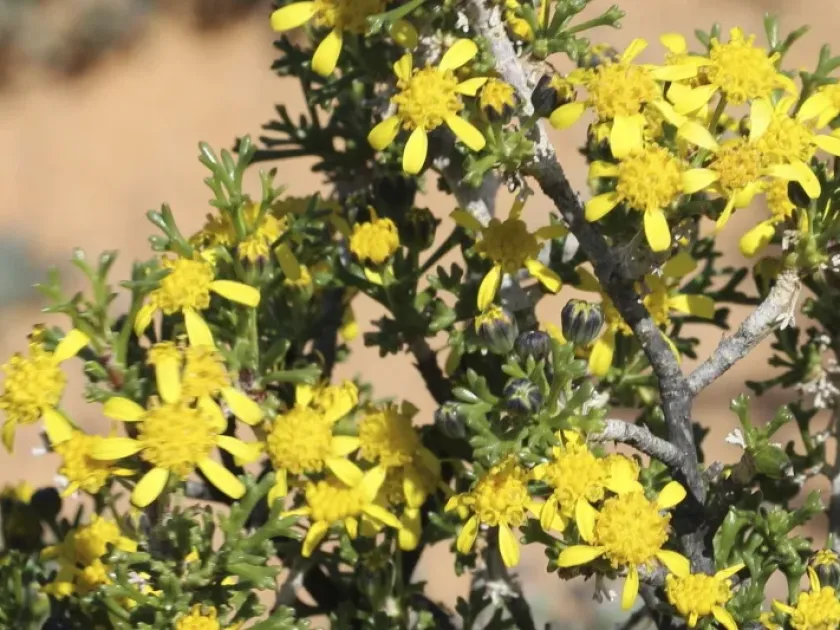
The plant is characterized by its finely divided, thread-like leaves that provide a distinct, airy texture. Its bright yellow, daisy-like flower heads bloom prolifically, creating a vibrant display that contrasts sharply with the glaucous foliage.
Cultivation requires full sun exposure to maintain the plant's compact and sturdy growth habit. Inadequate lighting conditions often result in elongated stems and a sparse appearance, reducing the plant's overall aesthetic and commercial value.
The ideal soil for this species is well-draining, sandy, or rocky ground with a neutral to slightly acidic pH. Poor drainage is the most significant limiting factor, as the roots are highly susceptible to rot if kept in saturated soil for extended periods.
In landscaping and horticulture, Euryops multifidus is prized for its drought tolerance and low water requirements once established. It is frequently utilized in xeriscaping, rock gardens, and as a focal point in containers in Mediterranean-like climates.
Main diseases and pests
Common pests affecting Euryops multifidus include spider mites and mealybugs, which are often attracted to the plant during periods of low humidity or heat stress. Early detection is crucial to maintain the plant's health and vigor.
Root rot remains the primary pathological threat, typically induced by improper irrigation practices or waterlogged soil. To minimize risk, growers should ensure superior substrate drainage and allow for adequate airflow around the base of the plant.