
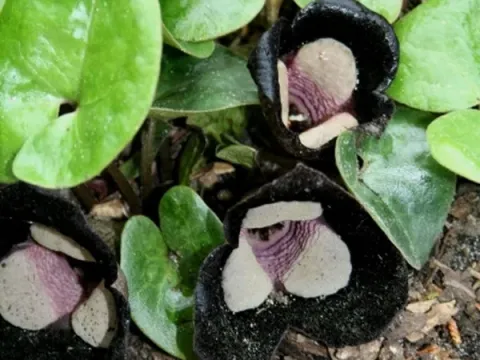
Giant wild ginger
Asarum maximum
Giant wild ginger (Asarum maximum) is a perennial herbaceous plant belonging to the Aristolochiaceae family. It originates from the woodland environments of China, where it thrives in the forest understory.
What the section contains
Giant wild ginger
The plant requires shaded locations to prevent leaf scorch. It performs best in moist, well-draining, humus-rich soil that mimics the conditions of a woodland floor with neutral to slightly acidic pH levels.
Botanically, it is defined by its large, cordate, and dark green leaves which often feature distinctive silver or white variegation. The plant spreads via creeping rhizomes, establishing a dense groundcover over time.
In terms of climate, it is suitable for temperate zones, though it requires winter protection in regions with harsh freezing temperatures. It does not tolerate prolonged drought or direct, intense sunlight.
The primary horticultural use of Asarum maximum is as a high-value ornamental groundcover. It is widely planted in shady garden corners, beneath trees, or in containers as a focal foliage plant.
Slugs and snails are the most significant pests for giant wild ginger. They are particularly attracted to the lush foliage during damp and overcast spring weather, often causing significant aesthetic damage.
Root rot is a common physiological threat, often caused by stagnant water or compacted soil. Ensuring adequate soil drainage at the planting site is essential for long-term survival.
Leaf spot diseases may appear if the plant is grown in overly dense groupings with poor airflow. Maintaining proper spacing and hygiene in the garden helps mitigate these fungal issues.
Transpiration stress during heatwaves can lead to wilting and crispy leaf edges. Providing mulch around the root zone helps maintain soil moisture and cool temperatures for the rhizomes.
While generally resistant to most insect pests, occasional infestations of aphids can occur on new, tender growth. Routine monitoring and prompt treatment with horticultural soap are effective measures.