
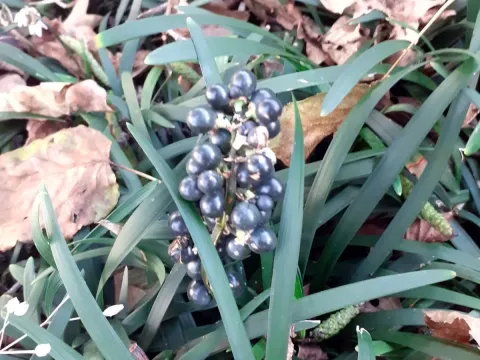
Big blue lilyturf
Liriope platyphylla
Liriope platyphylla, commonly known as the big blue lilyturf, is a perennial evergreen herbaceous plant belonging to the Asparagaceae family. Native to East Asia, it has become a staple in landscaping across various temperate and subtropical regions for its robust performance.
What the section contains
Big blue lilyturf
The plant is defined by its grass-like foliage that grows in dense mounds, originating from a root system featuring tuberous fleshy rhizomes. These rhizomes allow the plant to store energy efficiently, contributing to its resilience in different environmental conditions and ability to survive brief droughts.
For optimal growth, Liriope platyphylla requires fertile, well-draining soil with a neutral to slightly acidic pH level. While it is highly adaptable, the best performance is achieved in locations that offer partial to full shade, protecting the foliage from scorching during intense midday heat.
The climate requirements involve providing adequate moisture, especially during the establishment phase and periods of high temperature. Although the species shows good frost tolerance, mulching is recommended in regions with prolonged freezing temperatures to insulate the rhizomes and protect the evergreen leaves.
Agricultural and horticultural utility of this crop is primarily focused on landscape design. It serves as an excellent ground cover, a border plant, or a stabilizing element for slopes and shaded garden beds. Its ability to thrive in urban environments makes it a preferred choice for public landscaping.
The primary threats to Liriope platyphylla include root rot and fungal leaf spots, which are usually triggered by poor drainage or excessive humidity around the root zone. Ensuring that the planting site has superior water management is the most effective way to prevent these physiological and pathological issues.
Garden pests such as slugs and snails represent the main biological threat to this crop, as they are attracted to the succulent young foliage. Integrated pest management strategies, including site sanitation and physical barriers, are necessary to preserve the ornamental value of the plantings.