
Giant Dutchman's pipe
Aristolochia gigantea
Description
Growing requirements
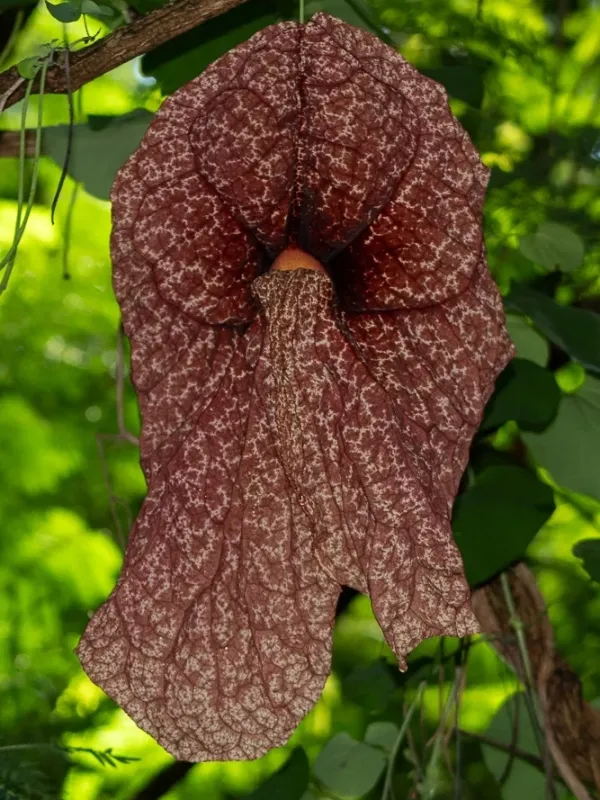
Aristolochia gigantea, commonly known as the Giant Dutchman's pipe, belongs to the Aristolochiaceae family. It is a vigorous, woody vine native to the tropical rainforests of Brazil, prized for its large, intricately patterned flowers.
The plant thrives in rich, well-draining soil that remains consistently moist. It prefers a position with bright, indirect light, as direct tropical sun can scorch the foliage, especially in arid or semi-arid climates.
Temperature requirements are stringent: the plant is highly sensitive to frost and must be kept in a warm environment above 15 degrees Celsius. In colder zones, it is best treated as a conservatory or greenhouse plant.
Agrotechnical practices involve providing a sturdy trellis or support structure for the vine to climb, as it can grow quite rapidly under ideal conditions. Regular pruning is necessary to maintain size and shape.
Watering should be frequent during the growing season, with a reduction during the cooler months to prevent root rot. High humidity levels are essential for healthy leaf development and preventing desiccated margins.
Main diseases and pests
Common pests include spider mites and aphids, which are particularly troublesome in indoor environments with low humidity. Regular inspections and early treatment with horticultural soaps are advised.
Root and crown rot are frequent issues caused by poor drainage or overwatering. Using a porous potting mix and ensuring the pot has adequate drainage holes is crucial for preventing these infections.
Fungal leaf spots can occur if the plant is kept in areas with stagnant air. Increasing air circulation and avoiding overhead watering can significantly lower the incidence of these diseases.
Nutrient deficiencies can lead to chlorosis or stunted growth, requiring a balanced liquid fertilizer applied during the growing season. It is important not to over-fertilize, as the plant can be sensitive to salt buildup.
Effective management involves consistent monitoring and the application of integrated pest management strategies. Keeping the plant vigorous through correct cultural practices is the best defense against threats.