
Lemmon's Wild Ginger
Asarum lemmonii
Description
Growing requirements
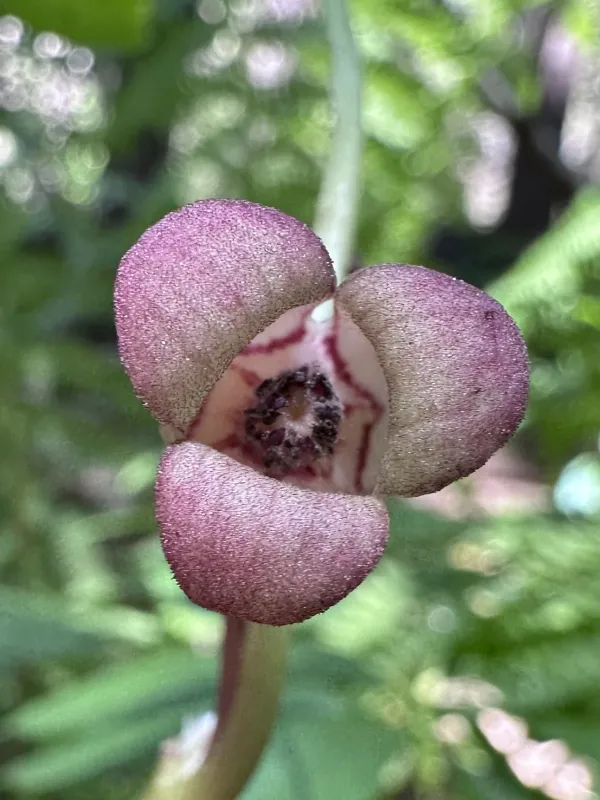
Lemmon's Wild Ginger (Asarum lemmonii) is a perennial herbaceous plant belonging to the Aristolochiaceae family. It is a distinctive groundcover species native to the mountainous woodland regions of California, USA.
The plant features creeping rhizomes and glossy, heart-shaped or kidney-shaped evergreen leaves. Its low-growing habit and ability to form dense, lush mats make it highly prized in woodland garden designs and shaded landscaping.
This species thrives in cool, shaded environments. It is essential to avoid direct sunlight, which can quickly scorch the foliage; therefore, planting under a dense tree canopy or in a north-facing position is highly recommended for success.
The soil requirements are specific: the substrate should be rich in humus, well-draining, and consistently moist. It prefers slightly acidic conditions similar to those found on the forest floor, where leaf mold accumulates naturally.
Cultivation practices primarily involve maintaining steady soil moisture, especially during the establishment phase. Once the plant has spread, its dense foliage acts as a natural mulch, helping to retain soil moisture and naturally suppressing weeds.
Main diseases and pests
The most significant pests affecting Lemmon's Wild Ginger are slugs and snails. These creatures are attracted to the succulent, moist foliage, particularly in damp weather, and can cause severe damage if left unmanaged in the garden.
Fungal issues, including various types of root rot, often occur if the soil is too heavy or if drainage is insufficient. Constant wetness combined with poor air circulation creates the perfect environment for pathogens to thrive.
In humid or stagnant conditions, leaf spot diseases can develop. Keeping the environment clean by removing fallen debris and ensuring space between plants can help reduce the prevalence of these fungal infections.
While aphids and spider mites are less common, they may occasionally infest the plant during prolonged dry spells or heatwaves. Regular monitoring during these periods is advised to catch potential infestations early.
Effective management includes maintaining proper horticultural hygiene and ensuring that the planting site has optimal light and moisture balance to keep the plant vigorous and resistant to potential threats.