
Hartweg's wild ginger
Asarum hartwegii
Description
Growing requirements
Hartweg's wild ginger (Asarum hartwegii) is a perennial herbaceous plant belonging to the Aristolochiaceae family. This species is native to the mountainous regions of California and Oregon, where it thrives in shaded woodland environments.
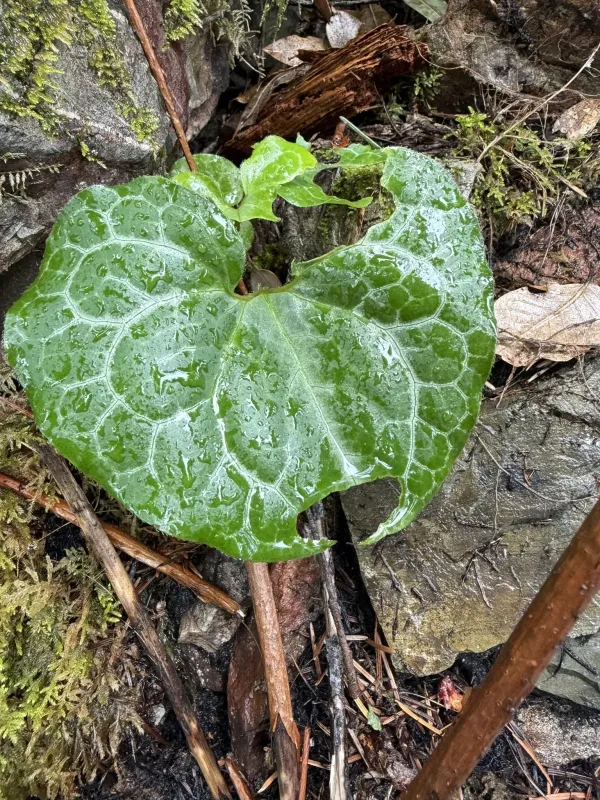
The plant is highly regarded for its evergreen, heart-shaped leaves which are often patterned with silver veins. This foliage remains attractive throughout the growing season, providing a unique texture to shaded landscape areas.
Cultivation of this species requires well-draining, humus-rich soil that mimics a forest floor. It demands deep or dappled shade; exposure to intense direct sunlight can cause leaf scorching and irreversible damage to the plant's health.
Maintenance involves consistent moisture management. While the plant loves water, it is essential to avoid waterlogged conditions, which can lead to root decay. A thick layer of organic mulch helps retain soil moisture and regulate soil temperature.
In terms of agricultural and horticultural use, Hartweg's wild ginger is primarily grown as a groundcover. It forms dense, low-growing mats that effectively fill spaces beneath tree canopies where other plants struggle to survive.
Main diseases and pests
The primary threats to this plant are soil-borne fungal pathogens caused by poor drainage. Preventing water accumulation around the rhizomes is critical for maintaining long-term plant vigor and avoiding crown rot.
Garden pests, particularly slugs and snails, are known to feed on the foliage, which can mar the plant's appearance. Gardeners are advised to monitor the plants during humid periods and implement physical or organic control methods if damage is observed.