
Delavay's Wild Ginger
Asarum delavayi
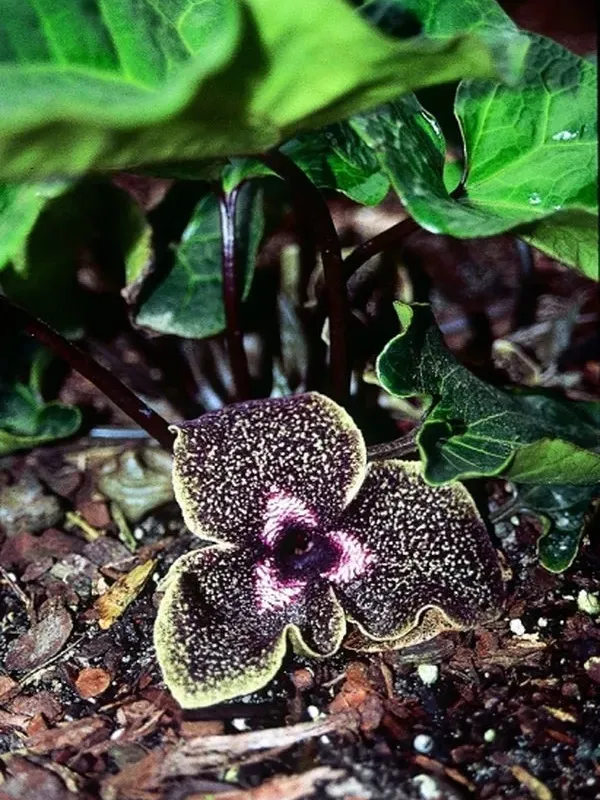
Description
Growing requirements
Delavay's wild ginger (Asarum delavayi) is a distinctive perennial herb belonging to the Aristolochiaceae family. It originates from the forested regions of Southwest China, where it thrives in moist, shaded environments.
This plant is primarily cultivated for its striking, heart-shaped evergreen leaves that often feature intricate silver marbling patterns. Its rhizomatous growth habit makes it an excellent choice for groundcover in areas with limited light.
The culture requires a shaded or semi-shaded location. Exposure to intense sunlight will scorch the leaves and significantly reduce the plant's aesthetic value, making it ideal for the woodland garden setting.
Soil requirements involve a rich, humus-based substrate that remains consistently moist yet drains freely. It performs best in slightly acidic to neutral soil profiles enriched with organic mulch.
In colder climates, winter protection is essential. A layer of organic mulch helps maintain soil temperature and provides protection for the evergreen foliage against cold drying winds during the dormant period.
Main diseases and pests
Slugs and snails are the most prominent pests for this species. They are particularly active during the spring growth flush and can cause significant aesthetic damage to the leaves overnight.
Fungal issues, including various forms of root and crown rot, can occur if the planting site lacks proper drainage or if the plant is subjected to stagnant water for extended periods.
Cultural control is the most effective approach; ensuring sufficient space between individual plants promotes air circulation, which helps dry the foliage and reduces the risk of fungal outbreaks.
Physical barriers such as crushed eggshells or copper tape can be used to protect the patch from gastropod damage without relying on harsh chemical pesticides.
Regular inspection of the rhizomes is recommended. If signs of decay appear, affected areas should be pruned back immediately, and the remaining healthy sections should be treated with an appropriate fungicide.