



Reference · Crops
Celery
Apium L.
Celery, scientifically known as Apium graveolens, is a biennial vegetable from the Apiaceae family. Due to its long growing season, which can span up to 200 days, it is predominantly cultivated through transplants in commercial farming.
5
items
What the section contains
Marketplace
Products in this section · 12



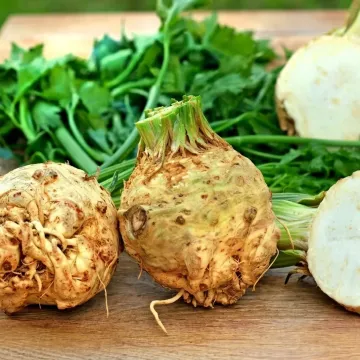


Celery
Sowing should begin in late winter, usually in February or early March, in protected seedbeds or trays. Because celery seeds are tiny and have a hard seed coat, pre-sowing treatments like priming or soaking are highly recommended for uniform germination.
Transplanting into the open field occurs once the danger of frost has passed and soil temperatures have warmed up. Plants should have a well-developed root system and at least four true leaves to ensure successful establishment in the field.
Spacing requirements vary depending on the variety: root celery typically needs 30–40 cm between plants, while leaf and stalk varieties can be planted closer together, around 20–25 cm apart, to optimize space.
Environmental conditions during the seedling stage are crucial. Maintaining a steady temperature around 18–20°C and ensuring sufficient light prevents the seedlings from becoming leggy or weak before they are set outdoors.
Celery thrives in deep, fertile, moisture-retentive soils that are rich in organic matter. A slightly acidic to neutral pH level is ideal for nutrient uptake, and good soil structure is necessary for proper root development.
Water is the most critical factor for celery growth. As a hydrophilic crop, it requires consistent irrigation; any moisture stress, especially during the formation of the root or stalks, will lead to poor quality, bitterness, and stunted growth.
The climate should be moderate, as celery prefers cooler temperatures ranging from 15°C to 22°C. While it is hardy, prolonged exposure to cold temperatures during early growth may induce premature bolting, which ruins the crop's marketability.
Full sun exposure is preferred for optimal photosynthesis and the development of the essential oils that give celery its characteristic aroma. Partial shade can be used in extremely hot climates to prevent leaf burn.
Nutrient management involves regular applications of nitrogen, phosphorus, and potassium. Potassium is particularly important for the final stages of growth in root celery, as it enhances disease resistance and storage longevity.
Yield varies significantly by variety: leaf celery is harvested multiple times for its foliage, while stalk celery is harvested once, often producing 30–40 tons per hectare under intensive management systems.
Root celery yields are typically measured in marketable root weight, ranging from 25 to 45 tons per hectare. High-density planting increases the total tonnage but may reduce the individual size of the roots.
Modern hybrid varieties are favored in commercial agriculture due to their uniformity and resistance to bolting. Using high-quality seeds and precise irrigation allows growers to maximize the marketable portion of the crop.
Harvest management involves careful monitoring of the root size and leaf development. Timely intervention with moisture and nutrients can boost production by 20–30% in well-managed commercial settings.
The use of drip irrigation technology is standard in modern celery farms, as it minimizes the risk of leaf diseases caused by wet foliage while ensuring roots receive constant moisture throughout the heat of the season.
Fungal diseases are the primary threats to celery crops, with Septoria leaf spot and early blight being the most common. These diseases thrive in humid conditions and can spread rapidly if air circulation is poor.
Insect pests, particularly the carrot fly (Psila rosae), are notorious for damaging celery roots, making them susceptible to rot during storage. Aphids and spider mites are also common in hot, dry weather conditions.
Crop rotation is essential for disease prevention; celery should not be planted in the same field more than once every three or four years to avoid the buildup of soil-borne pathogens and pests.
Effective pest management involves early detection through monitoring and the use of integrated pest management (IPM) strategies, which combine biological control, chemical applications, and mechanical barriers.
Maintaining clean fields by removing weed hosts that harbor viruses or pests is vital. Additionally, selecting disease-resistant cultivars is the most effective proactive measure against common fungal infections.
Leaf celery harvesting is an ongoing process throughout the growing season, involving the selective cutting of outer leaves to encourage continuous production from the center of the plant.
Stalk celery is usually harvested in late autumn before the first heavy frost. To achieve premium blanched stalks, growers often earth up or wrap the stalks with opaque material several weeks before harvest.
Root celery is harvested when the roots reach marketable size, ideally in dry weather. The plants are lifted carefully with tools to avoid bruising the skin, which is crucial for preventing infection and rot during storage.
Post-harvest handling requires trimming the tops and cleaning the roots before cooling. Removing excess soil prevents contamination and ensures the product remains clean and attractive for the retail market.
Optimal storage conditions for celery include a temperature near 0°C and high relative humidity (90–95%). Under these conditions, the product can be kept fresh for several months, extending the marketing window.